Choosing the right Reducing Coupling manufacturer in 2026 requires more than comparing catalog prices. Buyers must examine material quality, dimensional accuracy, production experience, and documented testing. A coupling may look suitable on paper, yet fail during installation if its threads, wall thickness, or tolerance are inconsistent.
This guide evaluates manufacturers through a practical buyer’s lens. It considers stainless steel, carbon steel, brass, and engineered plastic options for different piping environments. It also reviews pressure ratings, temperature limits, corrosion resistance, connection standards, and available size ranges. Reliable suppliers should provide traceable material certificates, inspection records, clear drawings, and representative samples before large orders. Small details matter.
Factory capability matters too. Buyers should examine machining equipment, forging or molding processes, surface treatment, and final inspection procedures. A supplier with documented quality systems, such as ISO 9001 certification where applicable, may offer stronger process control. However, certification alone proves little without recent audit evidence and consistent product samples.
Communication is another useful test. Can the manufacturer explain thread specifications clearly? Can it confirm production lead times and packaging methods? Can it respond when a sample reveals a minor mismatch? These practical moments often expose more than polished marketing claims. No ranking fits every project. That judgment remains imperfect. Still, comparing verified evidence, application knowledge, and after-sales support can help buyers select a Reducing Coupling partner with greater confidence and fewer costly surprises.
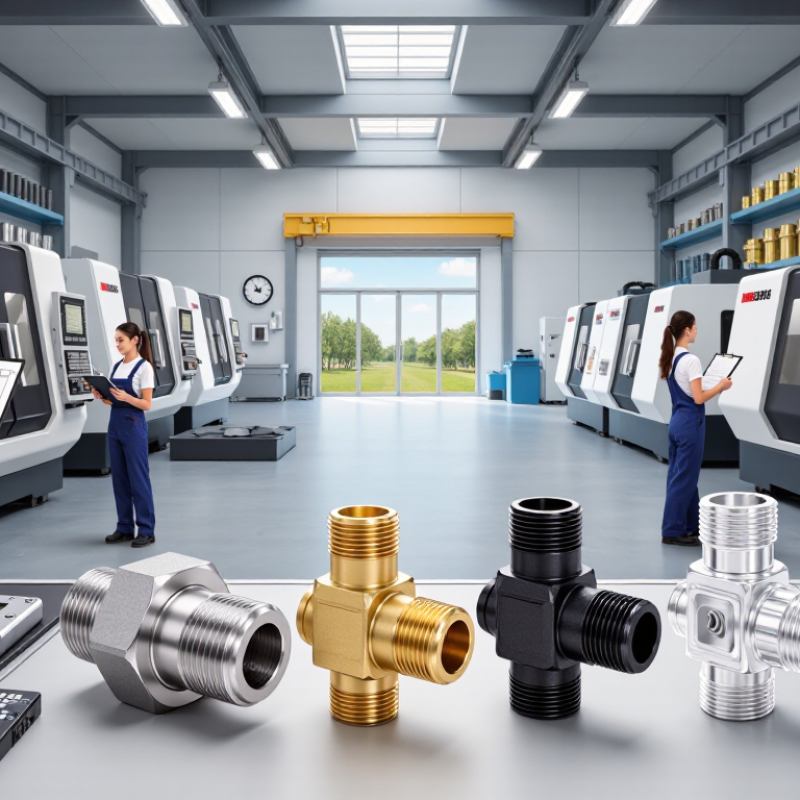
A reducing coupling joins two pipes with different diameters while keeping their connection aligned. One end accepts the larger pipe, and the other accepts the smaller pipe. Threaded, socket-weld, compression, and push-fit designs are common. The correct choice depends on the pipe material, joining method, temperature, and working pressure.
Inside the fitting, the passage changes size over a short distance. This transition guides fluid from the larger pipe into the smaller one. It can also increase velocity and create extra pressure loss. A smooth internal bore usually supports better flow than a rough, poorly matched connection. During purchasing, verify both end sizes, thread standards, wall thickness, and pressure ratings. A fitting may look correct but still fail dimensional checks.
Practical inspections often reveal small mistakes. Installers sometimes measure outside diameter when the specification requires nominal pipe size. That error can stop assembly completely. Sealant must also match the fluid and fitting material. Excess compound may enter the pipe and disturb sensitive equipment. Alignment matters too; forcing a coupling onto offset pipes can stress the joint. A simple rule helps: confirm the drawing, measure the pipe, then inspect the finished connection. Even this rule is not perfect, especially when old piping has corrosion or distorted threads. Suppliers should provide traceable material records, test data, and clear installation guidance.
Reducing couplings connect pipes with different diameters while maintaining a compact installation. In practical piping work, concentric couplings keep both pipe centers aligned. They suit many vertical liquid lines. Eccentric designs shift the centerline and help control air pockets or drainage problems in horizontal systems. Threaded couplings support quick assembly and maintenance. Socket-weld and butt-weld types provide stronger, more permanent joints for demanding service.
Material selection depends on pressure, temperature, fluid chemistry, and installation conditions. Carbon steel offers high strength for industrial water, air, and process lines. Stainless steel resists corrosion, especially around moisture and mild chemicals. Ductile iron handles robust water infrastructure, but its protective coating requires careful inspection. Brass works well in smaller plumbing connections. PVC and CPVC provide lightweight, corrosion-resistant options, although temperature limits must be checked closely.
A reliable buyer should verify dimensions, pressure ratings, wall thickness, and connection standards before comparing manufacturers. Standards such as ASME B16.9, ASME B16.11, ASTM specifications, or applicable regional requirements can support consistent purchasing. Do not judge quality by surface finish alone. I have seen polished fittings fail because the material grade was unclear. That mistake is easy to repeat. Request mill certificates, inspection records, and traceable markings. Check gasket compatibility too. A coupling may fit perfectly yet perform poorly with the wrong sealing material.
How to Evaluate Reducing Coupling Manufacturers in 2026
A reliable reducing coupling manufacturer should provide more than attractive pricing. Ask for material certificates, dimensional records, pressure-test results, and traceability from billet to shipment. The products should match relevant requirements in ASME B16.11, ASTM material specifications, and your project’s pressure class. The ISO Survey 2023 recorded 1,265,216 ISO 9001 certificates worldwide, but certification alone proves little. Verify the certificate number, audit scope, and manufacturing location. I once treated a polished certificate as proof of quality. That was too simple.
Evaluate production capability through measurable evidence. Check forging capacity, heat-treatment controls, inspection equipment, and nonconformance procedures. Request sample reports showing hardness, chemical composition, wall thickness, and thread accuracy. For critical systems, ask whether each lot receives hydrostatic or dimensional testing. The World Bank’s Logistics Performance Index 2023 highlights customs, infrastructure, and logistics competence as key supply-chain factors. Therefore, review delivery records, export packaging, and response times—not only factory photographs. Small details matter.
Tips: Compare at least three manufacturers using one scorecard. Give quality and traceability higher weights than price. Confirm minimum order quantities and replacement policies in writing. Ask for a pilot order before approving large volumes. Leave room for doubt. A supplier that cannot explain one test result may create larger problems later. Document every answer, including delays, revisions, and unclear technical claims.
| Evaluation Dimension | Verified Industry Requirement or Reference | Recommended Buyer Benchmark for 2026 | Evidence to Request from a Manufacturer | Suggested Weight |
|---|---|---|---|---|
| Product Standard | ASME B16.11 covers forged socket-welding and threaded fittings, including dimensions, tolerances, ratings, materials, and marking requirements. | The offered reducing coupling should clearly identify the applicable edition of ASME B16.11 or the project-specified equivalent. | Dimensional drawing, standard declaration, product marking photographs, and a sample inspection report. | 18% |
| Connection Type | Reducing couplings may be supplied with threaded ends, socket-welding ends, or a combination of both, depending on the design and service. | The manufacturer should confirm end type, nominal pipe size, thread form, socket dimensions, and compatibility with the joining procedure. | End-connection schedule, thread-gauge records where applicable, socket dimensions, and approved drawings. | 12% |
| Material Selection | Common forged fitting material specifications include ASTM A105 for carbon steel, ASTM A182 F304/F304L and F316/F316L for stainless steel, and ASTM A350 LF2 for low-temperature carbon steel applications. | Material grade, heat-treatment condition, and service-temperature suitability should match the piping specification rather than being selected only by price. | EN 10204 Type 3.1 material certificate, heat number, chemical composition, mechanical properties, and heat-treatment records. | 16% |
| Pressure Class | ASME B16.11 commonly defines Class 2000, 3000, and 6000 for threaded fittings, and Class 3000, 6000, and 9000 for socket-welding fittings, subject to material and design limitations. | The quoted class must correspond to the connection type, material group, temperature, and governing project code. | Pressure-rating table, design-temperature limits, product calculation basis, and conformity statement. | 14% |
| Dimensional Accuracy | Forged fitting dimensions must remain within the tolerances specified by the applicable product standard and approved engineering drawing. | Critical dimensions should be inspected using calibrated instruments, with traceable records for outside diameter, wall thickness, length, and connection geometry. | Inspection and Test Plan, dimensional inspection report, calibration certificates, and first-article records. | 12% |
| Manufacturing Route | Forged fittings are typically produced through processes such as hot forging, heat treatment, machining, inspection, and marking. | The production route should be suitable for the selected material and should provide consistent grain flow, heat treatment, and machining quality. | Process flow chart, forging and heat-treatment procedures, equipment list, and process qualification records. | 8% |
| Non-Destructive Examination | NDE requirements vary by material, service, purchase specification, and governing code. Common methods include magnetic particle testing, liquid penetrant testing, ultrasonic testing, and visual inspection. | NDE should be performed when required by the purchase order or service class, using qualified personnel and written acceptance criteria. | NDE procedure, personnel qualification records, test reports, acceptance standard, and repair history. | 8% |
| Quality Management | ISO 9001 certification demonstrates that a quality-management system has been audited against ISO 9001 requirements; it does not by itself certify a specific fitting. | Prefer a current, independently issued certificate covering the manufacturing site, supported by product-specific inspection controls. | Current ISO 9001 certificate, scope of certification, recent audit status, corrective-action records, and quality manual excerpt. | 8% |
| Traceability and Marking | Traceability normally links the fitting to its material heat or batch, grade, pressure class, size, and manufacturer identification required by the applicable standard. | Permanent marking and documentation should allow each supplied item or lot to be traced back to its material certificate and inspection records. | Marking procedure, traceability matrix, sample stamped fitting, packing list, and certificate cross-reference. | 6% |
| Documentation and Delivery Control | Delivery performance depends on size range, material availability, customization, inspection scope, and order quantity; no universal lead time applies to every reducing coupling. | Compare suppliers using a written manufacturing schedule, document-submittal dates, inspection hold points, packaging plan, and clearly defined delivery terms. | Production schedule, document register, inspection notification procedure, packaging specification, and Incoterms® quotation. | 6% |
| Commercial Evaluation | The lowest unit price may exclude testing, certification, packaging, freight, duties, inspection, and nonconformance risk. | Evaluate total landed cost, warranty terms, replacement policy, payment conditions, inspection cost, and the cost of delayed delivery. | Itemized quotation, warranty statement, payment terms, freight assumptions, validity period, and deviation list. | 4% |
| Total Evaluation Weight | 100% | |||
Industrial buyers should assess reducing coupling manufacturers through measurable evidence, not catalogue claims. Fit matters. Confirm nominal size, wall thickness, pressure class, temperature range, and connection standard before requesting quotations. The U.S. Department of Energy reports that industrial compressed-air systems can lose 20% to 30% of output through leaks. Poorly machined threads or weak sealing surfaces can increase this risk. Request dimensional inspection records, pressure-test results, material certificates, and batch traceability.
A reliable supplier should explain its quality controls clearly. The ISO Survey 2023 recorded more than 1.2 million ISO 9001 certificates worldwide, so certification alone does not prove manufacturing capability. Ask whether the certificate covers the actual production site. Review nonconformance rates, corrective-action records, inspection frequency, and sample approval procedures. Experience with corrosive fluids, vibration, thermal cycling, and frequent maintenance is more valuable than a polished website. That is costly.
Buyers should also compare lifecycle value. Examine tooling stability, minimum order quantities, replacement lead times, packaging, and technical support. A low unit price may become expensive when dimensional variation causes rework or shutdowns. Request pilot samples and test them under realistic pressure and temperature conditions. Do not rely only on laboratory figures. One overlooked factor is installation access; a coupling that fits technically may still be difficult to tighten in a crowded pipe rack. Supplier evaluation is never perfect. Recheck assumptions with maintenance teams before signing a long-term agreement.
The 2026 reducing coupling market rewards measurable performance, not attractive brochures. MarketsandMarkets’ 2024 Pipe Fittings Market report estimates growth from about USD 18.9 billion in 2023 to USD 25.2 billion by 2028. Buyers should compare wall thickness, pressure testing, thread accuracy, and material traceability. A coupling that looks polished may still fail dimensional inspection.
Certification needs practical checking. ISO 9001 supports controlled production, but it does not guarantee every batch is flawless. Request current certificates, laboratory reports, heat numbers, and sample inspection records. The International Organization for Standardization reports that ISO 9001 remains the world’s most widely used quality-management standard. Still, paperwork can become outdated. Verify the certificate scope and issuing body.
Pricing should include machining, coating, packaging, freight, inspection, and replacement risk. Price is not value. The 2024 Logistics Performance Index shows continuing differences in customs efficiency and shipment reliability across markets. Ask manufacturers for average lead time, on-time delivery data, emergency stock options, and clear claims procedures. A realistic supplier may quote 18 days, not promise five without evidence. I would compare three sample orders before committing. One successful shipment proves little.
It connects pipes with different diameters in a compact space. It helps maintain a continuous flow path. Check both sizes carefully. A small mismatch can delay installation.
Choose a concentric design when both pipe centers should remain aligned. It suits many vertical liquid lines. The connection looks symmetrical. Confirm the flow arrangement before ordering.
An eccentric coupling shifts the pipe centerline. It can help manage air pockets or drainage issues in horizontal systems. This detail matters. Ask the maintenance team about actual site conditions.
Carbon steel provides strength for industrial water, air, and process lines. Stainless steel performs better in moist or mildly chemical environments. Ductile iron suits robust water infrastructure, but coatings need inspection. Brass fits smaller plumbing connections. PVC and CPVC are lightweight and corrosion resistant. Their temperature limits can be restrictive.
Threaded couplings support quick assembly and easier maintenance. Socket-weld and butt-weld types create stronger, more permanent joints. Consider pressure, vibration, temperature, and future access. A technically strong joint may still be difficult to repair.
Confirm nominal size, wall thickness, pressure class, temperature range, and connection standard. Check material grade and gasket compatibility. Request dimensional inspection records and pressure-test results. Traceable markings are useful. A perfect fit can still seal poorly.
Ask for material certificates, batch traceability, inspection records, and corrective-action data. Confirm that quality certification covers the actual production site. Request pilot samples before placing large orders. Test them under realistic pressure and temperature conditions. One good sample proves little.
Include machining, coating, packaging, freight, inspection, and replacement risks. A low unit price may create expensive rework later. Ask for average lead times and on-time delivery records. An honest supplier may quote eighteen days instead of promising five. I would compare three sample orders. That still may not reveal every problem.
This guide explains what a Reducing Coupling is and how it connects pipes or tubes with different diameters while maintaining a secure, efficient flow path. It reviews common designs, including threaded, socket-weld, compression, and press-fit types, along with materials such as stainless steel, carbon steel, brass, copper, and engineered plastics. Understanding pressure ratings, temperature limits, corrosion resistance, and system compatibility helps buyers select the right solution for water, gas, chemical, and industrial applications.
For 2026 purchasing decisions, the guide presents practical methods for evaluating reducing coupling manufacturers. Buyers should compare dimensional accuracy, manufacturing consistency, testing procedures, certifications, technical support, pricing transparency, minimum order requirements, production capacity, and delivery reliability. A strong supplier should provide clear documentation, traceable quality controls, customization options, and responsive after-sales service. By balancing product performance, total cost, compliance, and supply-chain support, industrial buyers can choose dependable reducing couplings that meet both current operating needs and long-term project requirements.

Minde