Choosing the right Hdpe Ball Valve is not a simple catalog exercise. Global buyers must compare pressure ratings, temperature limits, port design, seals, body construction, and certification evidence. A valve may look robust on a warehouse shelf, yet fail early when exposed to chemicals, sunlight, thermal cycling, or poor installation.
Market data shows why this decision matters. Grand View Research estimates that the global high-density polyethylene market reached approximately USD 79.7 billion in 2023, with continued growth expected through 2030. Industry reports from PlasticsEurope also highlight polyethylene’s broad use in infrastructure, water systems, and industrial applications. These figures support strong demand, but they do not prove that every Hdpe Ball Valve offers equal performance. Reports often measure resin markets, not complete valve reliability. That distinction deserves attention.
David A. Willoughby, a recognized polyethylene-piping specialist and author of PE Pipe and Design, offers a practical warning: “Pressure rating alone does not define service suitability.” His guidance reflects field experience. Temperature, joining quality, operating cycles, and installation conditions can change real performance. Small details matter. A scratched sealing surface matters. So does an unclear test certificate.
This guide reviews seven Hdpe Ball Valve options for international buyers. Each product is considered through material quality, flow control, pressure capability, connection method, standards documentation, supplier support, and long-term maintenance. The comparison is not perfect; product data can vary between regions and batches. Buyers should verify current certificates, datasheets, and local requirements before ordering. That extra check may prevent an expensive mistake.
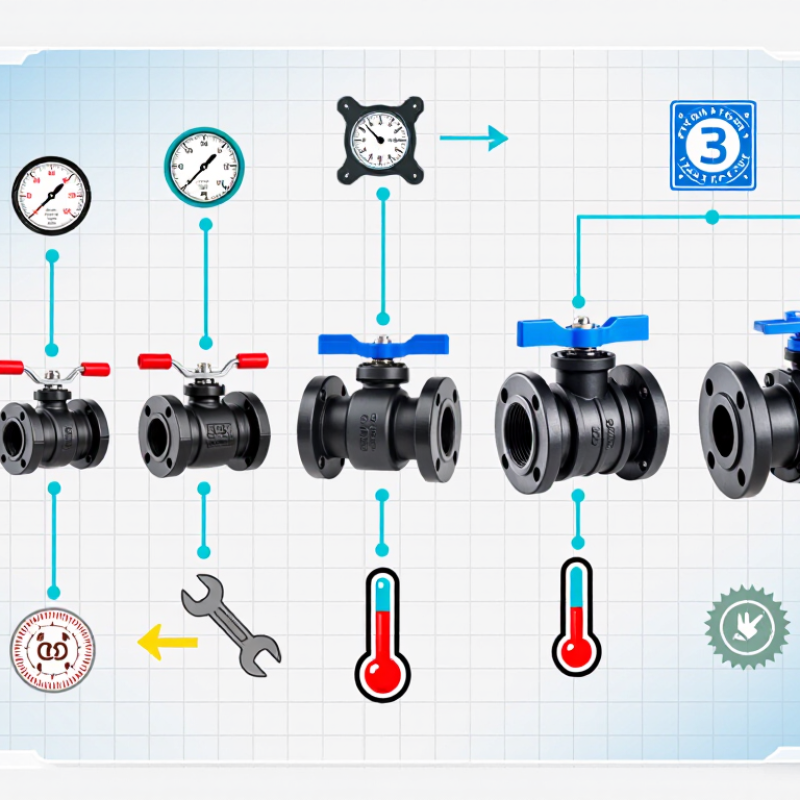
HDPE ball valves control fluid flow through a hollow, rotating ball. HDPE means high-density polyethylene, a tough thermoplastic used in water, irrigation, and chemical piping. The valve body resists rust, soil moisture, and many diluted chemicals. A drilled ball sits between two sealing seats. When the handle aligns with the pipe, fluid passes through. A quarter-turn rotates the ball across the passage and stops the flow. Simple, but not careless.
For global buyers, working pressure and temperature are practical starting points. Check the valve’s pressure rating at the actual operating temperature, not only at room conditions. Confirm the pipe’s outside diameter and connection method before ordering. Butt fusion, electrofusion, and threaded adapters are not interchangeable. Field inspections often reveal a basic mistake: the valve fits the pipe, but the actuator clearance is too small.
The seven best HDPE ball valves should offer stable sealing, smooth operation, and traceable material information. Look for documented resin grades, pressure tests, and dimensional tolerances. A full-bore design can reduce turbulence and cleaning problems. In abrasive service, however, no valve remains perfect forever. Sand may score the seats, and excessive force can damage the stem. Operators sometimes blame the valve when poor alignment caused the leak. That assumption deserves review. Correct support, clean fusion surfaces, and gradual commissioning matter just as much as the valve itself.
Choosing among seven HDPE ball valve options requires more than checking the lowest price. Start with pressure and temperature ratings. A valve used in a buried water line may face different stresses from one installed above ground. Confirm the rating matches the pipe system, fluid, and expected operating temperature.
Inspect the valve body, stem, seats, and seals closely. High-quality HDPE should resist impact, corrosion, and common chemicals in the intended service. The ball should turn smoothly without excessive force. Reinforced seats can reduce leakage after repeated cycling. Check whether the connection uses socket fusion, butt fusion, or another compatible method. A mismatch can create installation problems and costly rework.
Flow passage design also matters. A full-port opening usually creates less pressure loss than a reduced-port design. Verify the valve’s size, wall thickness, and dimensional compatibility before ordering. Clear markings help workers identify pressure class, material grade, and production batch. Reliable suppliers should provide test records, technical drawings, and traceability documents.
Field experience suggests testing the handle before installation. Small stiffness can reveal larger alignment or seat issues. No valve is perfect. Some designs balance low weight against reduced mechanical strength. That trade-off deserves careful review. I would also compare spare-part access, warranty terms, and technical support across regions. These details often matter more after the shipment arrives.
Seven Leading HDPE Ball Valve Options for Global Buyers
Global buyers can compare seven practical HDPE ball valve formats: full-port socket-fusion, reduced-port socket-fusion, butt-fusion, electrofusion, flange-ended, compression-ended, and lockable service valves. Each suits a different installation reality. Full-port designs reduce flow restriction, while reduced-port models may lower purchase cost. Butt-fusion supports permanent pipelines. Electrofusion helps in tight repair zones. Flanged valves simplify equipment connections. Compression ends support faster maintenance, but they need careful restraint. Lockable versions improve site control.
Grand View Research valued the global HDPE pipes market at about USD 22.43 billion in 2023 and expects steady growth through 2030. That expansion increases demand for traceable valve performance, not just low prices. The Plastics Pipe Institute states that properly designed polyethylene systems can provide service lives exceeding 50 years. However, the valve body, seals, and joining method must match pressure, temperature, and chemical exposure. ISO 16135 offers a useful reference for thermoplastic ball-valve requirements. Real projects still need verification.
Tips: Check the SDR rating, pressure class, flow direction, and operating torque. Request fusion compatibility documents and factory test records. Confirm seal material before handling disinfectants or hydrocarbons. A cheaper valve can become expensive after one failed joint. I would also inspect actuator clearance and winter protection, because catalog drawings often feel optimistic.
7 Best HDPE Ball Valves for Global Buyers
How to Match Valve Specifications with Piping Requirements
Selecting an HDPE ball valve starts with the pipe, not the catalog photo. Confirm outside diameter, SDR, pressure class, temperature, and fluid compatibility. For example, a 110 mm SDR11 PE100 pipe normally corresponds to PN16 at 20°C, but higher temperatures reduce the allowable working pressure. ISO 4427-1 defines PE100 with a 10 MPa minimum required strength over 50 years at 20°C. That figure supports design decisions, not careless pressure assumptions.
Check the valve’s body rating, bore size, end connections, and operating torque. A full-bore valve helps limit turbulence in a long water line, while a reduced bore may create unwanted head loss. The Plastics Pipe Institute’s PPI TR-4 report lists PE4710’s hydrostatic design basis as 1,600 psi at 73°F (23°C). However, the pipe and valve still need separate verification. Their ratings are not automatically interchangeable.
I have seen buyers match DN size while ignoring SDR. That mistake can leave a strong valve attached to a weaker system. Confirm ISO, ASTM, or local connection requirements before ordering. Electrofusion ends, butt-fusion ends, and flanged adapters are not universal. Metric dimensions can also be confused with NPS sizes. Small detail. Big consequence. Pressure cycling, buried installation, chlorine exposure, and maintenance access deserve documented checks, even when the service appears simple.
| No. | HDPE Ball Valve Type | Recommended Piping Match | Typical Size Range | Typical Pressure Rating | Temperature Range | Body and Seal Materials | Connection Method | Best Application | Key Specification Check |
|---|---|---|---|---|---|---|---|---|---|
| 1 | PE100 SDR11 Full-Port Ball Valve | PE100 pressure pipe manufactured to ISO 4427 or equivalent national standards; SDR11 service lines | DN20–DN63 | Up to PN16 at 20°C, subject to valve design | Approximately 0°C to 60°C | PE100 or reinforced thermoplastic body; PTFE or compatible elastomer seats; EPDM or FKM seals | Socket fusion, electrofusion, or PE stub-end transition | Potable water, irrigation, utility water, and small-diameter distribution branches | Confirm the valve pressure rating, outside diameter, SDR, and fusion compatibility with the pipe |
| 2 | PE100 SDR17 Reduced-Pressure Ball Valve | PE100 SDR17 or equivalent medium-pressure piping systems | DN63–DN315 | Commonly PN10 at 20°C; verify the valve manufacturer's pressure-temperature curve | Approximately 0°C to 60°C | PE100 body; PTFE, PE, or elastomeric seats; EPDM is common for water service | Butt fusion, electrofusion, or flanged transition ends | Municipal water mains, low-pressure process water, and irrigation networks | Do not select a PN16 valve automatically for SDR17 pipe; match the complete system rating |
| 3 | Electrofusion-Compatible Service Ball Valve | PE pressure pipe where joint traceability, confined-space installation, or repair isolation is important | DN20–DN63 | Typically PN16 for SDR11 systems | Approximately 0°C to 60°C | PE100 valve body; EPDM or FKM sealing elements; corrosion-resistant operating stem | Integrated electrofusion sockets or compatible electrofusion fittings | Service connections, household branches, gas-free water applications, and repair sections | Check fusion-zone dimensions, bar-code or welding-procedure requirements, and installation clearance |
| 4 | Large-Diameter Butt-Fusion Full-Port Ball Valve | Large-diameter PE100 mains with the same nominal outside diameter and SDR as the valve ends | DN90–DN315 | Typically PN10 or PN16, depending on SDR and valve construction | Approximately 0°C to 60°C | PE100 body; low-friction thermoplastic or PTFE seats; EPDM or FKM seals | Butt fusion using controlled heating, alignment, and cooling procedures | Transmission mains, water treatment plants, and buried distribution pipelines | Match outside diameter, wall thickness, SDR, fusion tooling, and valve face-to-face dimensions |
| 5 | Flanged HDPE Ball Valve with Stub-End Transition | PE piping connected to metal pumps, meters, filters, tanks, or existing flanged equipment | DN50–DN630 | PN10 or PN16 is common; flange and valve ratings must be identical | Approximately 0°C to 60°C | PE100 body or lined metal body; PTFE or thermoplastic seats; EPDM or FKM seals | PE stub end with loose backing flange; drilling may follow EN 1092-1 or ASME B16.5 requirements | Above-ground manifolds, pump stations, treatment facilities, and equipment isolation | Verify flange standard, pressure class, bolt circle, gasket type, and allowable bolt torque |
| 6 | Threaded HDPE Transition Ball Valve | Small PE branches transitioning to metal or plastic threaded fittings in non-critical service | DN15–DN50 | Typically PN10; derating may apply to threaded connections | Approximately 0°C to 60°C | PE or glass-fiber-reinforced thermoplastic body; EPDM, FKM, or PTFE sealing components | Female or male BSP, NPT, or other specified thread; PE socket or compression transition | Irrigation branches, equipment drains, sampling points, and low-flow utility services | Select the correct thread standard, avoid excessive tightening, and confirm compatibility with the fluid |
| 7 | Actuated HDPE Ball Valve for Automated Isolation | PE process or utility piping requiring remote shutoff, sequencing, or emergency isolation | DN25–DN200 | Typically PN10 or PN16; actuator torque must exceed the valve breakaway torque | Valve temperature commonly 0°C to 60°C; actuator limits may differ | PE or reinforced thermoplastic valve; EPDM, FKM, or PTFE seals; electric or pneumatic actuator | Fusion, flanged, or threaded ends with ISO 5211-compatible mounting where applicable | Water treatment, chemical dosing, industrial utilities, and automated distribution systems | Check fail-safe position, control voltage, enclosure rating, cycle time, torque, and manual override |
Installation, Maintenance, Standards, and Buying Considerations
When comparing seven HDPE ball valves, installation details deserve more attention than appearance. Clean pipe ends carefully. Remove dust, moisture, and sharp scratches before joining. Misalignment can place constant stress on the valve body. Support nearby pipework, especially on vertical runs. For electrofusion models, use controlled heating and cooling times from the technical instructions. Do not rush the cooling period. A pressure test should follow the applicable project specification, with the valve fully open during testing unless instructed otherwise.
Maintenance is usually simple, but neglect still causes failures. Rotate the ball periodically when the system allows it. Check for stiff movement, seepage, damaged handles, and loose connections. Sand or aggressive chemicals may shorten service life. Record inspection dates and operating conditions. This small habit improves traceability. However, field records are often incomplete, which makes later fault analysis harder. Never force a seized handle with an extended lever; the stem or seat may be damaged.
Buying decisions should include pressure rating, SDR compatibility, temperature range, media resistance, connection method, and actuator requirements. Ask for material certificates, dimensional drawings, pressure-test records, and batch traceability. Relevant references may include ISO 4427, ASTM F714, ISO 16135, and local water or industrial regulations. Standards are not interchangeable. Confirm the exact edition and application with a qualified engineer. A lower purchase price can hide costly adapters, difficult installation, or limited spare-part support. Samples should be inspected before large orders. Small details matter.
Common formats include full-port, reduced-port, butt-fusion, electrofusion, flanged, compression-ended, and lockable valves. Each suits a different installation condition.
Choose a full-port design when low flow restriction matters. Its opening closely matches the pipe’s internal diameter. It may cost more.
A reduced-port valve can lower purchase costs and suit less demanding flow requirements. However, its narrower passage may increase restriction.
Butt-fusion creates a permanent joint when pipe ends are prepared correctly. Clean, aligned surfaces are essential. Mistakes can become expensive.
Electrofusion works well in tight repair zones or areas with limited equipment access. Follow heating and cooling instructions carefully. Do not rush.
Compression-ended valves can support faster maintenance and replacement. They still need proper restraint and accurate alignment. Loose pipework may stress the connection.
Check pressure rating, SDR compatibility, temperature range, media resistance, and connection type. Request drawings, material certificates, test records, and batch traceability.
Clean pipe ends and remove moisture, dust, and sharp scratches. Support nearby pipework, especially on vertical runs. Misalignment creates constant stress.
Rotate the ball periodically when the system permits. Inspect handles, stems, seals, connections, and visible seepage. Never force a seized handle.
References may include ISO 16135, ISO 4427, and ASTM F714. Standards are not interchangeable. Confirm the exact edition and application with a qualified engineer.
This guide explains how an Hdpe Ball Valve controls fluid flow by using a rotating spherical closure inside a durable polyethylene body. It reviews the main features global buyers should compare, including pressure and temperature ratings, pipe size, connection type, sealing performance, chemical resistance, operating torque, and service life. It also presents seven practical valve options based on different piping needs, such as water distribution, irrigation, industrial processing, and drainage systems, without focusing on any specific brand.
The guide further shows how to match valve specifications with pipe material, diameter, flow requirements, and installation conditions. It covers essential considerations for proper installation, routine inspection, cleaning, replacement of seals, and safe operation. Buyers will also learn why recognized standards, quality documentation, supplier reliability, availability of spare parts, shipping conditions, and total cost of ownership matter when selecting an Hdpe Ball Valve for international projects.

Minde