Choosing the right Female Thread Elbow can determine whether a piping system remains dependable or develops leaks after installation. In field applications, small differences in thread accuracy, material quality, and flow direction matter. A fitting may look suitable on a workbench, yet fail when exposed to vibration, temperature changes, or repeated pressure cycles.
This guide presents seven practical tips for selecting Female Thread Elbow fittings with greater confidence. It examines thread standards, connection size, material compatibility, pressure ratings, temperature limits, sealing methods, and supplier reliability. Stainless steel, brass, and reinforced plastic each suit different environments. A brass elbow may work well with clean water, but it may not resist aggressive chemicals or outdoor corrosion. Check the medium carefully.
Thread confusion is common. NPT, BSP, and other profiles are not automatically interchangeable. Even a tight connection can leak if the threads only appear compatible. Measure the pipe, confirm the thread specification, and review the manufacturer’s technical data. Do not rely on appearance alone.
Installation practice also deserves attention. Excessive tightening can damage threads or split softer materials. Insufficient sealing can leave a slow drip hidden behind insulation. That mistake is easy to miss. Look for documented pressure testing, batch traceability, and consistent dimensional control from the supplier. These details support safer purchasing decisions and more predictable service life.
Some choices remain application-dependent. There is no universal best fitting. By comparing real operating conditions with verified specifications, buyers can reduce rework, maintenance costs, and unexpected downtime. A careful review now is usually cheaper than replacing a leaking elbow later.
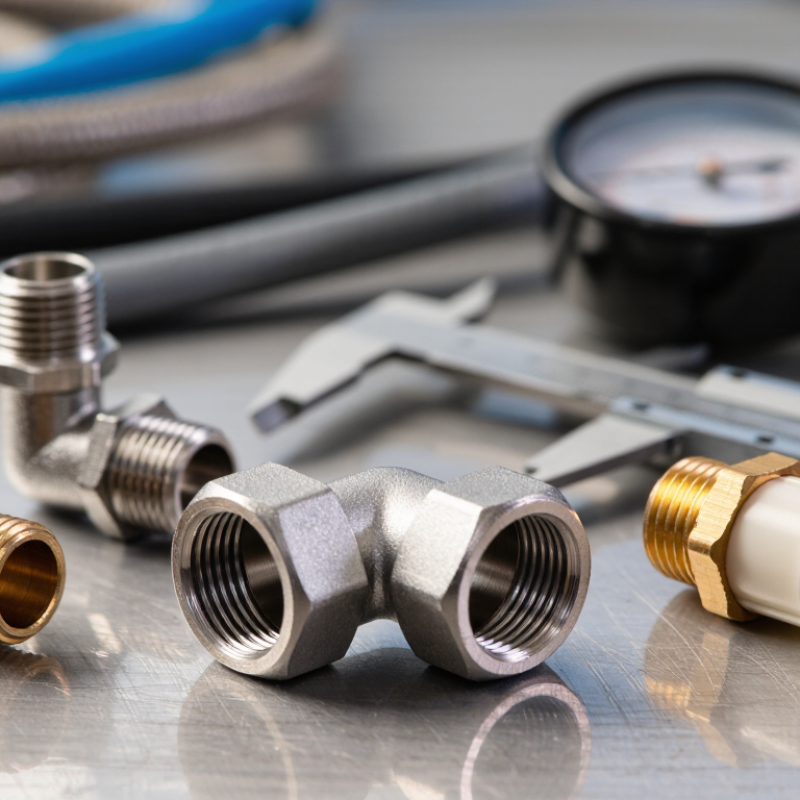
A female thread elbow fitting is a compact connector that changes a pipe or tube run’s direction, commonly by 90 degrees. Its elbow-shaped body has one or more internally threaded openings. A matching male-threaded component screws into each opening, creating a joined path for fluid or air. The fitting can help route a line around a frame, wall, or nearby component where a straight connection will not fit.
The threads hold the parts together, but they do not always provide the seal by themselves. Some tapered thread designs tighten as they engage; others rely on a washer, O-ring, or specified sealing method. Thread standards matter. Two fittings may look similar and still fail to mate properly. Check the thread type, size, material, and pressure rating against the connected system. A mismatch can cause leaks or damage.
Installation should feel controlled, not forced. Align the parts before tightening, and follow the fitting maker’s guidance for sealant and torque. Too much force can deform threads, especially on softer materials. In practice, access can be awkward; a fitting that works on a bench may be difficult to tighten behind a panel. That detail is easy to miss. After assembly, inspect the joint under the intended operating conditions and watch for seepage.
7 Tips for Choosing Female Thread Elbow Fittings
How to Match Fitting Materials with Your Piping System
Tip: Start with the fluid. Water, compressed air, oils, and cleaning chemicals can affect fitting materials differently. Check the fluid’s temperature and concentration, not just its name. A mild solution at room temperature may behave differently when heated. If the mixture changes during operation, ask the supplier for compatibility data.
Tip: Match the fitting to the pipe and working conditions. Brass elbows are common in many water and air systems, while stainless steel may suit corrosive environments. Plastic fittings can work well where weight and chemical resistance matter, but heat and pressure limits vary. Confirm the female thread standard, size, and sealing method before ordering. Threads can look similar and still fail to mate properly. That detail is easy to overlook.
Tip: Consider the whole system, not only the elbow. Check pressure ratings at the highest expected temperature, since heat can reduce allowable pressure. In outdoor or damp locations, consider corrosion exposure and how often connections will be inspected. Avoid mixing metals without evaluating galvanic corrosion risk, especially where moisture is present. Keep a sample fitting or clear measurements nearby when comparing options. It is not foolproof, but it can prevent a costly mismatch. When service conditions are uncertain, verify material suitability with a qualified piping professional and document the decision for future maintenance.
| Tip | What to Check | Material or Connection Guidance | Why It Matters |
|---|---|---|---|
| 1 | Identify the fluid or gas and its chemical properties. | Use a material compatibility chart for the exact fluid, concentration, temperature, and exposure conditions. Stainless steel, brass, and plastics each have different chemical-resistance limits. | A fitting that is unsuitable for the service can corrode, crack, contaminate the fluid, or leak. |
| 2 | Match the fitting material to the pipe material and system environment. | Consider corrosion, galvanic effects between dissimilar metals, outdoor exposure, and whether the piping is metallic or plastic. Use transition components where the piping-system design requires them. | Material compatibility helps reduce corrosion and damage at the connection. |
| 3 | Confirm the thread standard and thread size on both ends. | NPT is a tapered thread commonly used in North America; BSPT is tapered and BSPP is parallel. These thread forms are not generally interchangeable. Verify the standard, nominal size, and sealing method. | Threads that appear similar may not seal correctly when their profiles or dimensions differ. |
| 4 | Check working pressure at the system’s operating temperature. | Use the fitting manufacturer’s published pressure rating for the exact material, size, thread, and temperature. Do not assume a rating from a different fitting type or material applies. | Allowable pressure can decrease as temperature rises and varies by design and material. |
| 5 | Account for normal and peak operating temperatures. | Compare the system’s minimum and maximum temperatures with the fitting’s documented limits. Plastic fittings may have lower temperature limits than metal fittings, depending on the polymer and design. | Temperature affects strength, sealing performance, and material life. |
| 6 | Choose the elbow angle and port arrangement for the layout. | A 90-degree elbow changes flow direction by a right angle. Confirm that the female-thread size, orientation, available clearance, and required flow path match the installation. | The correct geometry can simplify routing and avoid unwanted strain on connected pipework. |
| 7 | Verify sealing, installation, and applicable requirements. | Use a sealant or gasket suitable for the thread type, fitting material, and service. Follow the fitting instructions and applicable codes or standards; avoid over-tightening, especially on plastic threads. | Correct installation helps prevent leaks and protects threads from damage. |
Selection note: Confirm compatibility, pressure and temperature ratings, and applicable requirements using the fitting documentation and the piping-system design before installation.
A female thread elbow must match the mating thread standard, not just its apparent diameter. Measure the opening and check thread pitch with a gauge; a close visual guess can still leak. Confirm whether the connection is NPT, BSPP, or BSPT, since these profiles seal differently. Do not force mismatched threads. They may start smoothly and still fail under pressure.
Choose the angle around the actual pipe route. A 90-degree elbow makes a tight turn, but needs enough space for the fitting and a wrench. A 45-degree elbow can ease the change in direction and reduce abrupt flow restriction. Check the drawing and measure clearance against nearby walls, valves, and moving parts. Small details matter. I have seen layouts where the angle was right, but the wrench could not reach the joint.
Before ordering, verify female thread depth, port orientation, operating pressure, temperature, and fluid compatibility. Compare the supplier’s dimensional drawing with the assembled layout, including seal requirements. Thread engagement should be firm, not forced; overtightening can damage the fitting or distort a sealing surface. If the application is critical, confirm the specification with a qualified engineer. It feels overly cautious sometimes, but replacing a poorly matched elbow is usually harder than checking twice.
Approximate basic major diameters for common NPT sizes. Match the fitting’s thread standard and nominal size to the mating component; diameter alone does not determine compatibility.
Angle tip: Choose a 45° elbow for a more gradual change in direction or a 90° elbow for a right-angle turn. Confirm the angle, thread standard, pressure rating, and material for your application.
A female thread elbow must handle more than the line’s normal operating pressure. Check the fitting’s rated pressure at the actual operating temperature, since many materials lose capacity as heat rises. Include pressure spikes, pump cycling, and vibration in your review. Small details matter. A pressure gauge may show a steady reading while brief surges go unnoticed. Compare the fitting rating with the system’s maximum expected pressure, not just its usual reading. Confirm the thread standard, too; similar-looking threads may not seal together correctly.
Temperature limits apply to both the elbow body and its sealing material. A metal fitting may tolerate heat that an elastomer seal cannot. Check the fluid’s name, concentration, and temperature against reliable compatibility data for every wetted part. For example, a seal suitable for cool water may swell or harden in a hot chemical solution. It is easy to overlook cleaning fluids or occasional washdowns. I would also verify whether the fluid carries grit, since particles can wear sealing surfaces over time. When data is unclear, ask the supplier or a qualified engineer before installation. Then inspect the assembled joint for leaks under controlled conditions, following the system’s safe test procedure. Even careful checks can miss something; record the assumptions and review them when service conditions change.
7 Tips for Choosing Female Thread Elbow Fittings
How to Compare Installation Methods, Quality, and Long-Term Value
Choosing a female thread elbow fitting starts with accurate measurement. Confirm the pipe size, thread standard, pressure rating, and operating temperature. A fitting can look correct yet leak when thread profiles differ. Check the connection type carefully. NPT, BSP, and other standards are not interchangeable. Measure twice.
Compare installation methods before buying. Threaded fittings suit repairs and compact spaces, but they require careful alignment. Use approved thread sealant or tape suitable for the fluid and temperature. Keep sealant away from the first thread. Tighten the fitting with a wrench on its hex section, never on the elbow opening. Over-tightening may crack softer materials. It happens more often than expected.
Quality depends on material consistency, clean threads, smooth internal surfaces, and clear markings. Inspect for casting flaws, burrs, and damaged edges. For demanding systems, request pressure-test records and material documentation. Long-term value includes labor, replacement access, corrosion resistance, and leak risk. A cheaper fitting may need earlier replacement or more frequent inspection. Consider the full service life, not only the purchase price. Small details matter. A practical selection can still be imperfect when site conditions change, so leave room for inspection and future maintenance.
It is an elbow-shaped connector with internal threads. It redirects a pipe or tube, often by 90 degrees. A male-threaded part screws into its opening. It can guide a line around a wall or frame.
Threads hold the components together, but threads alone may not seal. Some tapered threads tighten during engagement. Other connections need a washer, O-ring, sealant, or tape. Always follow the specified sealing method.
Match the thread standard, size, pitch, and depth. Do not rely only on the opening’s visible diameter. Use a thread gauge when possible. NPT, BSPP, and BSPT profiles are not interchangeable.
Choose the angle according to the actual pipe route. A 90-degree elbow makes a compact turn. A 45-degree elbow creates a gentler direction change. Measure nearby walls, valves, and moving parts first.
Confirm port orientation, pressure rating, temperature, and fluid compatibility. Check the female thread depth and required seal. Compare the dimensional drawing with the assembled layout. A small clearance mistake can block wrench access.
Align the threads by hand before tightening. Use sealant or tape suitable for the system. Keep sealant away from the first thread. Tighten with a wrench on the hex section. Never force the connection.
Mismatched threads may engage briefly and still leak. Excessive torque can deform threads or crack softer materials. Using the elbow opening as a wrench point can cause damage. It happens surprisingly often.
Look for clean threads, smooth internal surfaces, and clear markings. Check for burrs, casting flaws, and damaged edges. For demanding systems, request pressure-test records and material information. Visual inspection is useful, but it is not perfect.
Inspect the joint under its intended operating conditions. Watch the connection for seepage or movement. Check it again after the system reaches normal temperature and pressure. Access may be awkward behind a panel. That detail is easy to miss.
Choosing the right Female Thread Elbow fitting starts with understanding how its angled body and internally threaded ends connect sections of a piping system while changing the direction of flow. First, select a material suited to the pipe, operating environment, and fluid. Then confirm that the thread size and type match the connected components, and choose an elbow angle that fits the layout without creating unnecessary flow restrictions.
Before purchasing, check that the fitting’s pressure and temperature ratings are appropriate for the system and that its material is compatible with the fluid. Consider how it will be installed, including the tools and sealing method required, and inspect the fitting for consistent workmanship and a secure thread finish. Comparing these factors, along with expected service life and maintenance needs, helps you choose a dependable option that offers lasting value.

Minde