What Are the Top 10 Types of Drip Irrigation Connectors?

Time:2026-10-24 Author:Oliver
0%

Drip Irrigation Connectors look small, yet they control the integrity of an entire watering network. A loose barb can waste water beneath dry mulch. A poorly matched elbow can restrict flow before plants receive moisture. These details matter because agriculture accounts for about 70% of global freshwater withdrawals, according to FAO AQUASTAT. Efficient distribution begins with dependable connections.

Industry research also shows continuing interest in drip irrigation. Grand View Research identifies water conservation, precision farming, and protected cultivation as major market drivers in its Drip Irrigation Market Size report. However, broad market growth does not guarantee reliable field performance. Connector material, tube diameter, operating pressure, filtration, and installation technique still decide the outcome. A 16-millimeter lateral needs a secure fit. It also needs a clean punch and a stable seal.

Charles M. Burt, Ph.D., a respected irrigation engineer and founder of the Irrigation Training and Research Center, states a practical principle: “The objective of irrigation is to apply water uniformly and efficiently.” That objective reaches every connector, not only the emitter. This guide examines the top 10 types of Drip Irrigation Connectors, including straight couplings, tees, elbows, takeoff adapters, valves, and end closures. Each type solves a different layout problem. Some are quick to install. Others provide stronger control under pressure. None is perfect.

That last point deserves attention. A cheaper connector may save money initially, then create hidden leaks. Field conditions can expose assumptions that looked reasonable in a catalog. Reliable selection requires evidence, hands-on inspection, and respect for local water quality.
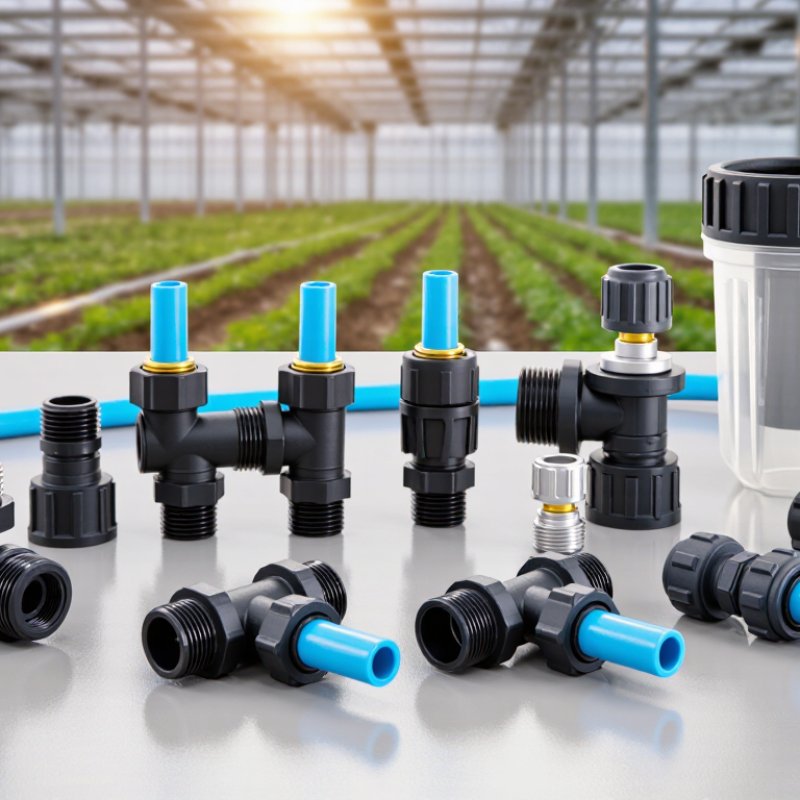
What Are the Top 10 Types of Drip Irrigation Connectors?

Types of Drip Irrigation Connectors and Their Main Functions

Drip irrigation connectors join tubing, regulate water paths, and simplify repairs. In field installations, the right connector prevents leaks around vegetable beds, greenhouse rows, and young trees. I still recheck every joint after pressure testing. Small errors become wet soil patches.

The ten common types serve different functions. Barbed couplers join two equal tubing sections. Reducing couplers connect different tube sizes. Elbow connectors turn lines around corners. Tee connectors divide one supply line into two branches. Cross connectors create four-way distribution. End plugs close unused tubing ends. Takeoff connectors connect main tubing to smaller feeder lines. Valves control flow for individual beds. Grommet outlets create sealed connections through thin supply pipe. Stake connectors hold emission lines in position near plant roots.

Each type has a practical role. Couplers support extension and quick repairs. Elbows protect tubing from sharp bends. Tees and crosses organize multiple planting rows. Plugs help flush sediment during maintenance. Valves are useful when crops need different watering schedules. Grommets reduce movement at drilled openings, although poor drilling can still cause leaks. Stake connectors keep outlets above muddy soil. Select connectors by tubing diameter, water pressure, and seasonal temperature. A tight fit matters, but excessive force may damage soft tubing.

The Top 10 Drip Irrigation Connector Types Explained

Drip irrigation connectors come in many shapes, and each serves a different installation need. These ten types are commonly used in gardens, greenhouses, and small farms.

Barbed couplers join two lengths of tubing securely. Barbed tees divide water into separate irrigation lines. Elbow connectors change the tube direction around corners. End caps close open tubing ends during operation. Punch-in connectors create outlets directly through polyethylene tubing.

Fit matters.

Takeoff connectors connect a mainline to smaller drip tubing. Compression fittings grip tubing without external clamps. Threaded adapters link drip tubing with threaded valves, filters, or water sources.

Valve connectors regulate flow to individual zones. Grommet connectors seal holes where lateral lines enter a larger pipe.

Each type has a specific role. Substitution can cause leaks or uneven pressure.

In field installation, matching the connector to the tubing diameter is essential. Measure the outside diameter, not just the printed tube size. Push barbed fittings fully into warm tubing, but avoid excessive force.

Compression fittings need clean, square-cut tubing. A tilted cut may create a slow leak.

Check joints after the system runs for several minutes. Pressure changes.

Sun exposure, fertilizer residue, and repeated movement can weaken poor connections. I would not treat every connector as interchangeable. Even a reliable fitting can fail when buried in rocky soil or installed on stressed tubing. A careful installer leaves slight flexibility near each joint and keeps connectors accessible for inspection.

How Each Connector Fits Different Irrigation System Designs

Drip irrigation connectors determine how easily a system bends, branches, expands, and shuts down. In practical installations, the ten most useful types are barbed couplers, straight connectors, elbow connectors, tee connectors, cross connectors, end caps, takeoff adapters, threaded adapters, valve connectors, and punch-in grommets. Each one solves a different layout problem.

Barbed couplers join two runs of tubing, while straight connectors keep long beds aligned. Elbows guide lines around raised beds or greenhouse corners. Tees split one supply line into two zones, and crosses serve larger layouts with four branches. End caps close unused tubing ends and help flush sediment. They are simple, but often overlooked.

Takeoff adapters connect distribution tubing to a mainline. Threaded adapters suit filters, pressure regulators, or rigid pipe transitions. Valve connectors add manual control near planting sections. Punch-in grommets create clean outlets in larger poly pipe, especially when emitters need precise spacing. I usually press each fitting firmly and inspect it under pressure. A tiny leak can wet one corner while leaving another plant dry. For sandy soil, exposed connectors may loosen over time, so buried joints need extra checking. Not every design needs all ten types. I once used too many tees in a narrow bed, and maintenance became awkward. A simpler route would have worked better.

Factors for Choosing the Right Drip Irrigation Connector

Top 10 Types of Drip Irrigation Connectors: Factors for Choosing the Right One

The ten common connector types are barbed couplers, tees, elbows, crosses, reducers, end caps, valves, threaded adapters, takeoffs, and punch-in fittings. Choosing among them requires more than matching tube diameter. Installers should check operating pressure, filtration, water chemistry, temperature, and seasonal movement. A connector that fits dry tubing may leak after expansion. I have seen small leaks form beneath mulch, where they remain unnoticed for weeks. That detail matters because water savings disappear quietly.

The FAO AQUASTAT database reports that agriculture accounts for about 70% of global freshwater withdrawals. The U.S. Environmental Protection Agency describes drip irrigation as potentially reaching about 90% efficiency, compared with lower-efficiency systems. These figures do not guarantee performance. A connector must suit the emitter flow rate and pressure range. For sandy soil, inspect flushing points and choose accessible end caps. For hard water, favor smooth internal passages and removable valves. Threaded adapters help with rigid manifolds, while barbed fittings suit flexible lateral lines. Compression fittings can resist pulling, but they may cost more. There is no universal best choice.

Tips: Measure the outside diameter, not just the label. Test every joint at working pressure before burying it. Leave a short service loop near valves. Recheck connections after the first hot week. I would also record leak locations; memory is unreliable, and installation notes often reveal repeated failures.

Installation and Maintenance of Drip Irrigation Connectors

What Are the Top 10 Types of Drip Irrigation Connectors?

Installation and Maintenance of Drip Irrigation Connectors

Drip irrigation connectors join tubing, valves, emitters, and water sources. The ten common types include straight barbed connectors, elbows, tees, crosses, reducers, threaded adapters, end caps, flush valves, punch-in connectors, and takeoff connectors. Each serves a different layout or repair need. Straight connectors extend tubing, while elbows guide lines around beds and corners. Tees divide water into separate rows. Reducers match different tube diameters. End caps close unused lines and support flushing.

Installation begins with clean, flexible tubing and correctly sized fittings. Cut tubing squarely with a sharp tool. A crooked cut can cause leaks. For punch-in connectors, make a small hole without tearing the tube wall. Push the fitting firmly into place, then check its seal under operating pressure. Avoid forcing rigid fittings into cold tubing. Warm water can make the material easier to handle, though excessive heat may deform it. Keep connectors supported, especially near valves and suspended lines.

Maintenance requires regular inspection. Walk the irrigation rows after pressurizing the system. Look for spraying joints, wet soil patches, blocked outlets, and loose caps. Flush lines when sediment appears. Remove a connector before cleaning it, rather than twisting it aggressively. I have found that small leaks often stay unnoticed beneath mulch. That mistake is easy to repeat. Replace cracked fittings, brittle washers, and stretched tubing promptly. Recheck pressure after repairs, because one restricted connector can reduce flow across an entire row.

FAQS

What are the main types of drip irrigation connectors?

Common types include barbed couplers, tees, elbows, crosses, reducers, end caps, valves, adapters, takeoffs, and punch-in fittings. Each supports a different layout or repair.

How should I choose the correct connector size?

Measure the tubing’s outside diameter, not only its printed label. A small size mismatch can create leaks or restrict water flow.

Which connector works best for flexible tubing?

Barbed connectors usually suit flexible lateral tubing. Push them firmly into clean, flexible tubing. Cold tubing can resist installation.

When are elbows, tees, and crosses useful?

Elbows guide lines around corners. Tees divide water into two rows. Crosses divide water into three directions.

Why are reducers and threaded adapters important?

Reducers join tubing with different diameters. Threaded adapters connect flexible lines to rigid manifolds, valves, or water sources.

How should punch-in connectors be installed?

Make a small, clean hole without tearing the tube wall. Push the fitting firmly into place. Test the seal under operating pressure.

How can I prevent hidden connector leaks?

Pressurize every joint before burying it. Walk the rows and inspect wet soil, spraying joints, loose caps, and blocked outlets.

How should connectors be maintained after installation?

Flush lines when sediment appears. Replace cracked fittings, brittle washers, and stretched tubing quickly. Recheck pressure after every repair.

Does one connector type always perform best?

No universal choice exists. Pressure, filtration, water chemistry, temperature, tubing movement, and emitter flow all matter.

What installation detail is easy to forget?

Leave a short service loop near valves. Record leak locations. My memory is unreliable, and repeated failures can look random.

Conclusion

Drip Irrigation Connectors are essential components that join tubing, control water flow, and help create an efficient, organized irrigation network. This article introduces the top 10 connector types, including straight connectors, elbows, tees, crosses, reducers, adapters, end caps, valves, take-off connectors, and repair couplers. Each type serves a different purpose, from extending irrigation lines and changing direction to dividing water into multiple branches or closing unused outlets. Understanding these functions makes it easier to design a system for gardens, greenhouse beds, containers, and larger planting areas.

The article also explains how connector selection depends on tube size, layout, water pressure, material quality, installation conditions, and future expansion needs. Proper installation requires secure, leak-resistant connections and careful alignment of tubing. Regular maintenance, such as checking for leaks, clearing blockages, and replacing damaged parts, helps preserve consistent water distribution. With the right connectors and routine care, a drip irrigation system can operate efficiently while delivering water directly to plant root zones.

Oliver

Oliver

Oliver is a seasoned marketing professional with a wealth of expertise in driving brand awareness and engagement. With a deep understanding of our company's product offerings, he consistently delivers high-quality content that enriches our professional blog. His insights not only shed light on......