Drip tape connectors look small, but a poor fit can turn a carefully planned irrigation line into a source of leaks. For global buyers, the right choice depends on tape width, wall thickness, connection style, and operating pressure. A connector that fits one supplier’s tape may not seal another brand equally well. Check the dimensions, not just the product photo.
Irrigation researcher Freddie Lamm’s work on irrigation performance offers a useful principle, paraphrased here: “Consistent water delivery depends on dependable components throughout the system.” This guide compares 10 Drip Tape Connectors with practical buying factors in mind, including material, grip, sealing design, installation effort, and availability. It also considers how connectors behave at end lines, repairs, and branch points, where a loose joint can become easy to miss. Look for clear sizing information and realistic pressure guidance. Still, no connector is universally best; supplier charts rarely capture every field condition. That is worth remembering.
A low-cost option may work well for a small garden, while a large farm may value repeatable assembly and replacement access more. Buyers should confirm compatibility with their tape before ordering in bulk. A short sample test can help. The products in this list are starting points, not a substitute for checking specifications or testing a fitting under the conditions it will face. Small parts deserve careful attention.
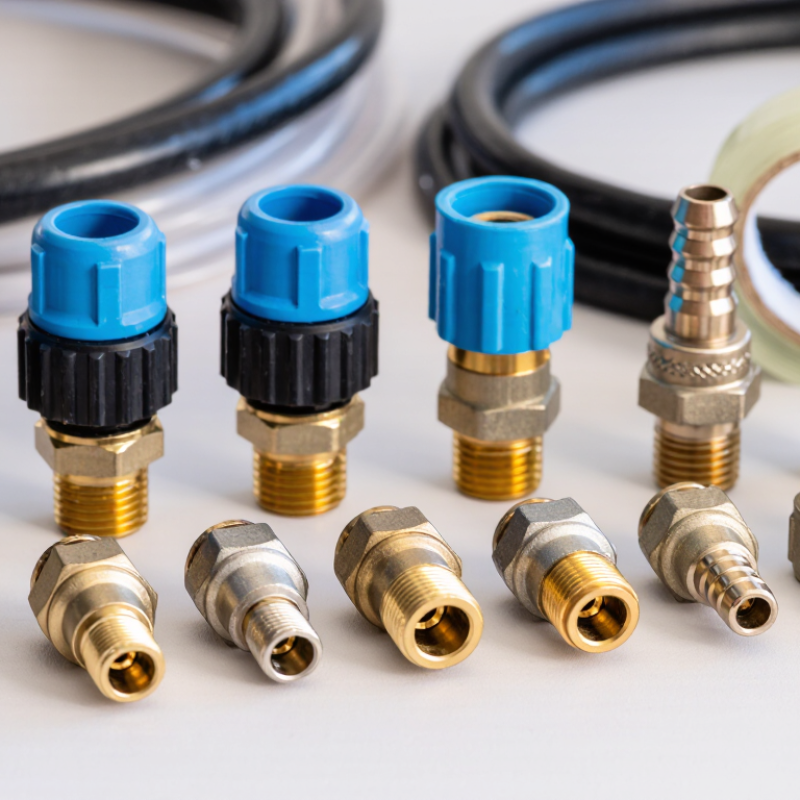
Top 10 Drip Tape Connectors for Global Buyers
Drip Tape Connector Basics: Common 16 mm and 17 mm Tape Sizes
For drip tape, 16 mm and 17 mm are common nominal sizes, not a guarantee of identical fit. Check the tape’s outside diameter, wall thickness, and connector’s barb dimensions before ordering. A difference of one millimeter can mean a loose joint or a tape that splits during installation. Measure a sample with calipers. Then test the connector by hand.
Most connectors use a barbed insert, a threaded outlet, or a compression-style joint. Match the connection to the mainline and confirm that clamps or locking rings suit the tape material. Keep the tape end square, push it fully onto the barb, and inspect the joint under operating pressure. Small leaks matter. A dry-looking connection can still seep once the line is pressurized, so a brief field test is worth the extra time.
The sizing detail matters in a water-intensive sector. FAO’s 2021 report The State of the World’s Land and Water Resources for Food and Agriculture estimates that irrigated land covers about 20% of cultivated area and produces roughly 40% of food. FAO AQUASTAT reports that agriculture accounts for around 70% of global freshwater withdrawals. These figures make dependable connections practical, not cosmetic. Still, nominal size alone is an imperfect buying guide; tape batches and wall thickness can vary. Ask suppliers for measured dimensions and a sample fitting before placing a large order.
A practical comparison of common connector types for low-pressure drip irrigation systems. Size compatibility is nominal and can vary by tape profile and manufacturer.
| No. | Connector Type | Typical Connection | Common Tape Compatibility | Typical Materials | Common Use | Buyer Check |
|---|---|---|---|---|---|---|
| 1 | Straight tape coupling | Tape to tape, inline | 16 mm or 17 mm nominal tape; confirm the connector’s barb profile | Polypropylene (PP) or acetal; some designs use elastomer seals | Joining two tape lengths or replacing a damaged section | Match the connector to the tape’s measured width and wall thickness. |
| 2 | Repair coupling | Tape to tape, short repair fitting | Usually offered for a specified 16 mm or 17 mm tape system | PP or acetal, often with compression nuts | Repairing cuts, punctures, or damaged ends | Check whether the fitting requires a clean, square cut and tool-free tightening. |
| 3 | Tape tee connector | Three tape connections | 16 mm or 17 mm nominal tape, subject to fitting design | PP or acetal | Splitting a tape run into two branches | Confirm all three ports are sized for the same tape specification. |
| 4 | Tape elbow connector | Tape to tape, 90-degree turn | Commonly available for 16 mm and 17 mm tape systems | PP or acetal | Routing tape around corners or obstacles | Allow enough space to avoid sharp bends or kinking near the fitting. |
| 5 | Start connector with grommet | Mainline or header pipe to tape | Tape outlet is commonly sized for 16 mm or 17 mm tape | PP or acetal connector; rubber or EPDM grommet | Starting a tape row from a rigid or semi-rigid mainline | Match the grommet to the mainline wall and drilled hole diameter. |
| 6 | Take-off adapter | Mainline outlet to tape connector | Typically accepts a specified 16 mm or 17 mm tape fitting | PP or acetal; elastomer seal may be included | Connecting tape rows to a header pipe or manifold | Check the mainline connection type, such as a barbed shank or threaded outlet. |
| 7 | Tape end plug | Closes one tape end | Designed for a stated tape size, often 16 mm or 17 mm | PP or acetal | Sealing the end of a row for operation or flushing | Choose a secure closure that can be removed easily if periodic flushing is needed. |
| 8 | Figure-eight end closure | Folds and secures the tape end | Often used with 16 mm or 17 mm tape; verify the clip opening | UV-stabilized plastic, commonly PP | Closing a row without a separate end plug | Confirm the clip suits the tape’s flattened width and does not cut the tape. |
| 9 | Flush valve or flush-end fitting | Tape end to removable or openable outlet | Available for selected 16 mm and 17 mm tape profiles | PP or acetal; seal materials vary by design | Flushing sediment from the tape at the end of a line | Check the opening method and ensure it is accessible after installation. |
| 10 | Threaded tape adapter | Tape to threaded pipe, valve, or manifold port | Tape barb or compression side is specified for 16 mm or 17 mm tape | PP or acetal; sealing washer may be included | Connecting a tape run to a threaded distribution component | Verify thread standard and size separately; nominal pipe threads are not interchangeable across standards. |
Important: “16 mm” and “17 mm” are nominal tape-size descriptions, not a guarantee that every connector will fit every tape. Before ordering, check the tape’s actual dimensions, wall thickness, connector profile, mainline hole size, and operating-pressure requirements against the product specifications.
Many systems operate around 0.5–1.0 bar. This is not a universal rating, so check your tape and connector specifications.
Compare the tape’s wall thickness and inside diameter with the connector dimensions. A clean, square cut helps the tape sit evenly over the barb.
Test at operating pressure, then look for bulging, seepage, or a connector that twists loose. Small mismatch, big leak.
Test a short section first at 0.5–1.0 bar. Inspect it again after several minutes; field cuts can be imperfect.
No. It covers testing requirements for emitters and emitting pipe, not every tape-to-fitting joint. Ask for joint test results.
Ask for dimensional tolerances and leakage or pull-off test results using your tape thickness. Material names alone tell you little.
Choose UV-stabilized polymers and request weathering data. A laboratory test cannot promise a specific lifespan in a hot, uncovered field.
Confirm compatibility with water chemistry, fertilizers, and operating pressure. Check for twists or cuts, and make sure each seal compresses evenly. A small leak still matters.
Drip Tape Connectors come in several practical designs for building, extending, and closing irrigation lines. This guide compares ten common options, including barbed fittings, grommet-style takeoffs, connectors with shutoff features, couplers, and end caps. It explains how these parts are used with common 16 mm and 17 mm tape sizes, while emphasizing that nominal size alone does not guarantee a secure fit: tape dimensions, wall thickness, and connector geometry should all be checked together.
Reliable connections depend on suitable materials and careful pressure matching. For systems typically operating around 0.5–1.0 bar, buyers should confirm that the tape and fittings are compatible and inspect joints for leaks before regular use. The guide also outlines the relevance and limits of ISO 9261, and highlights UV-resistant polymers and dependable seals as useful selection factors. Its top-ten ranking weighs compatibility, leakage performance, cost, and supply availability to help global buyers compare options for different irrigation needs.

 Minde