Global buyers choose a Saddle Clamp when secure pipe support, practical installation, and supply consistency matter. This fitting wraps around a pipe and provides a stable mounting point for brackets, cables, or auxiliary lines. Its compact shape can simplify work in crowded mechanical rooms, agricultural systems, and industrial assemblies. Less drilling is often required. That saves time.
An experienced purchasing team examines more than the unit price. Pipe diameter, clamp material, bolt quality, coating thickness, and expected load all affect performance. Stainless steel may suit humid or corrosive environments, while galvanized steel can offer a cost-effective option for many general applications. The correct choice depends on the system. A reliable supplier should provide dimensional drawings, material information, inspection records, and consistent packaging. Clear markings also help warehouse teams identify sizes quickly.
Global sourcing introduces practical concerns. Thread standards, measurement systems, pallet requirements, and delivery conditions may differ between markets. Buyers should confirm these details before placing large orders. A sample installation can reveal alignment problems that photographs cannot show. This step feels slow, but it prevents expensive rework.
A Saddle Clamp is not a universal solution. Poor sizing can damage a pipe or weaken the support structure. Coatings may also deteriorate in severe environments. That caveat matters. Buyers should compare tested specifications, supplier experience, and after-sales communication instead of trusting attractive claims alone. With careful verification, this simple component can support safer assemblies, steadier procurement, and more predictable project outcomes across international markets.
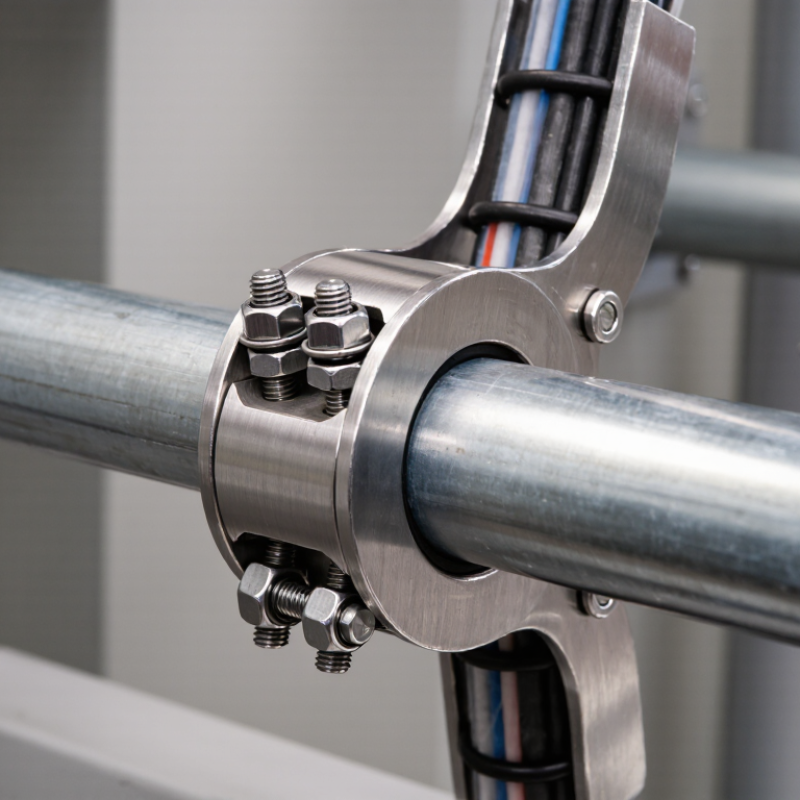
Why Choose Saddle Clamps for Global Buyers?
A saddle clamp is a two-piece fitting that grips the outside of a pipe. Its curved body matches the pipe diameter. Bolts pull both halves together evenly. A rubber gasket then presses against the pipe surface, creating a sealed contact area. Some models include a threaded outlet or branch connection. Others simply reinforce a damaged section.
The mechanism is simple, but installation requires judgment. The pipe must be clean, round, and free from deep scoring. Correct outside diameter matters more than nominal size. Installers should tighten bolts in a cross pattern, using the specified torque. Excessive force can deform plastic pipe. Insufficient force can cause leakage. That detail is often underestimated.
The World Bank has reported that about 32 billion cubic meters of treated water are lost through leaks each year. The WHO/UNICEF Joint Monitoring Programme reported in 2023 that 2.2 billion people still lacked safely managed drinking water. These figures explain why repairable connection methods remain valuable. Saddle clamps can reduce excavation, shorten shutdown time, and support localized repairs. They are not magic. Pressure rating, gasket material, temperature, pipe chemistry, and local certification still require verification. For global purchasing, request dimensional drawings, pressure-test records, material certificates, and installation instructions. A cheaper clamp may become expensive when its gasket fails early.
| Data Dimension | Verified Technical Information | Why It Matters to Global Buyers |
|---|---|---|
| Product definition | A saddle clamp is a curved mechanical fitting that conforms to the outside surface of a pipe. Depending on its design, it can support, restrain, repair, connect, or provide a branch outlet from the pipe. | The same general term covers several product types, so buyers should specify the intended function before requesting quotations. |
| Basic operating principle | The clamp body distributes contact around the pipe circumference. Bolts, straps, or other fasteners generate clamping force, while a gasket may seal the interface on pressure-rated products. | Correct load distribution and controlled tightening reduce leakage, pipe deformation, and movement during service. |
| Common product configurations |
|
Configuration determines whether the item is suitable for structural support, temporary repair, permanent branching, or pressure service. |
| Pipe materials | Saddle clamps may be designed for metallic pipes such as carbon steel, stainless steel, ductile iron, and cast iron, or for plastics such as PVC, PE, and HDPE. Compatibility depends on the specific product design. | The clamp must match the pipe’s outside diameter, surface characteristics, stiffness, and allowable deformation. |
| Typical body materials | Common choices include ductile iron, carbon steel, stainless steel, and engineered plastics. Material selection depends on mechanical loads, corrosion exposure, temperature, and fluid conditions. | Material selection affects service life, shipping weight, corrosion resistance, and total lifecycle cost. |
| Sealing components | Pressure-rated repair or branch saddles commonly use elastomeric gaskets. EPDM is widely used for many water applications, while other elastomers may be selected for oil, gas, chemicals, or elevated temperatures. | The gasket must be compatible with the conveyed medium, temperature range, pressure, and applicable regulations. |
| Connection method | Depending on the model, connection may use threaded outlets, flanged outlets, grooved ends, welded outlets, compression fittings, or a plain branch opening. | The outlet must match the downstream valve, fitting, pipe, or equipment connection used in the installation country. |
| Size selection | Selection is based primarily on the pipe outside diameter, not only on the nominal pipe size. Buyers should also confirm pipe wall thickness, allowable tolerance, and branch outlet size. | Nominal sizes vary between pipe systems and regions; measuring the actual outside diameter helps prevent fit and sealing problems. |
| Pressure considerations | A saddle clamp’s pressure rating is product-specific. It depends on body strength, gasket design, pipe material, pipe condition, fastener load, temperature, and installation method. | Buyers should never infer the allowable working pressure from pipe size alone; the supplier’s rated pressure and test documentation are required. |
| Temperature range | The usable temperature range is governed mainly by the gasket, liner, coating, and pipe material. Elastomer limits differ substantially by compound and formulation. | Temperature data should be reviewed together with pressure data because allowable pressure can change as temperature rises. |
| Installation requirements | Installation generally requires a clean pipe surface, correct alignment, even tightening, and the specified bolt torque. Pressure-service products may require system isolation, depressurization, or specialized tapping equipment. | A technically suitable clamp can still fail if the pipe surface, bolt load, alignment, or installation procedure is incorrect. |
| Corrosion protection | Protection options include stainless steel construction, metallic coatings, fusion-bonded epoxy, paint systems, protective sleeves, and corrosion-resistant fasteners. | Coating and fastener choices should reflect soil, humidity, salt exposure, chemicals, UV exposure, and buried or above-ground service. |
| Typical applications | Water distribution, wastewater systems, irrigation, fire-protection piping, industrial utilities, mining, building services, and general mechanical pipe support. | Application conditions determine the required material, sealing compound, pressure class, outlet design, and approval documents. |
| Advantages for international procurement | Compact geometry, relatively simple installation, broad pipe-size availability, reduced hot-work requirements for many models, and suitability for maintenance or retrofit work. | These characteristics can reduce site downtime, labor requirements, and logistical complexity when the product is correctly specified. |
| Limitations | Not every saddle clamp is suitable for pressurized service, damaged pipe, high temperature, cyclic loading, buried installation, or potable-water contact. Some designs require an intact and relatively smooth pipe surface. | A site assessment and product-specific approval are essential where safety, public water, gas, or high-pressure service is involved. |
| Documents to request | Technical drawing, dimensional schedule, material certificates, gasket information, pressure-test report, installation instructions, bolt-torque requirements, coating details, and relevant conformity or test documents. | Complete documentation supports engineering approval, customs classification, quality inspection, and local regulatory compliance. |
| Standards and compliance | Applicable requirements may include regional pipe, flange, pressure-equipment, drinking-water, fire-protection, or coating standards. The exact requirement depends on the market and application. | Global buyers should identify the destination-country requirements before production rather than relying on a generic compliance claim. |
| Recommended purchasing data | Pipe outside diameter, pipe material, pipe wall thickness, conveyed medium, operating pressure, operating temperature, outlet type and size, installation environment, quantity, and required documents. | Providing these details enables accurate sizing, comparable quotations, and fewer delays caused by technical clarification. |
A saddle clamp is a two-piece fitting that grips a pipe’s outside surface. Its curved body matches the pipe. Bolts join both halves.
A rubber gasket presses against the cleaned pipe surface. This creates a sealed contact area around the fitting.
Some models reinforce damaged sections. Others provide a threaded outlet or branch connection. Deep scoring still needs careful evaluation.
Check the actual outside diameter, not only the nominal pipe size. The pipe should be clean, round, and stable.
Tighten the bolts in a cross pattern. Use the specified torque. Too much force may deform plastic pipe.
Zinc-plated steel suits sheltered areas. Stainless steel handles humidity and coastal exposure better. Reinforced polymer can reduce weight.
Request dimensional drawings, pressure-test records, material certificates, tolerances, and installation instructions. Batch traceability also helps.
Measuring only from drawings can cause a poor fit. I would verify the real pipe, bolt access, and mounting strength.
They can reduce excavation and shorten shutdowns. The benefit depends on pressure, temperature, gasket material, and pipe chemistry.
No universal design exists. Check load ratings, vibration, corrosion resistance, and local certification before purchasing. A cheaper clamp may fail early.
A Saddle Clamp is a practical pipe connection component designed to attach a branch outlet, support fitting, or service line to a larger pipe. Its curved body follows the pipe surface, while bolts, threaded connections, or welded structures create a stable seal and secure hold. Depending on the application, saddle clamps may be produced from stainless steel, ductile iron, carbon steel, or durable engineered materials, with features such as corrosion resistance, pressure tolerance, adjustable fastening, and reliable performance in demanding environments.
For global buyers, selecting the correct Saddle Clamp requires careful attention to pipe diameter, outlet size, pressure rating, temperature range, connection type, and material compatibility. Buyers should also confirm applicable dimensional standards, testing requirements, surface treatment, packaging, documentation, and quality inspection procedures. Before placing an international order, it is important to verify product drawings, quantities, lead times, shipping conditions, and installation requirements with the supplier. A thorough evaluation helps reduce compatibility issues, support efficient installation, and ensure dependable long-term service.

 Minde
Minde