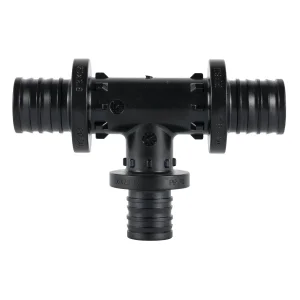
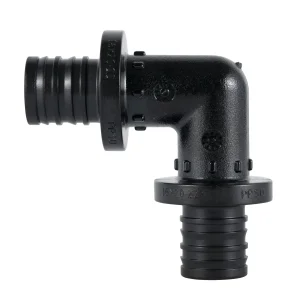
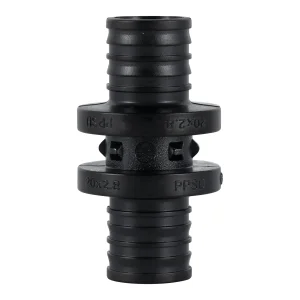
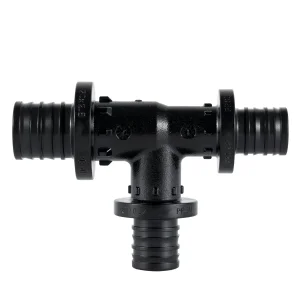
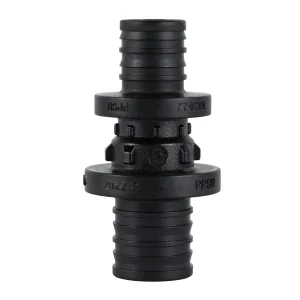
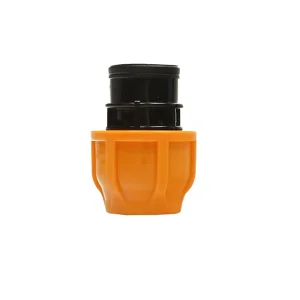
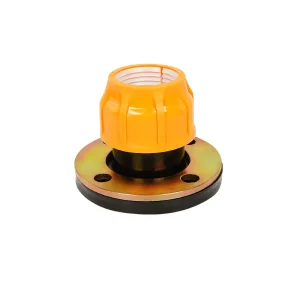
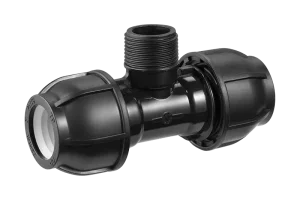
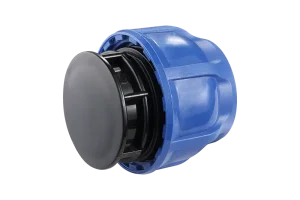
Engineered for robust mechanical expansion connections under heavy hydraulic stress. Standardized sizing for hot & cold underfloor water networks.
Brazil is witnessing a monumental paradigm shift in its civil construction and sanitation frameworks. Historically reliant on traditional metallic systems (copper, brass) and basic rigid plastics (PVC) for water delivery, the Brazilian housing and industrial sector is rapidly converting to advanced polymeric solutions. The regulatory implementation of ABNT NBR 15939 (standardizing PEX systems for hot and cold water installations) has cleared the legal and engineering path for advanced polymers.
Polysulfone (PPSU) represents the pinnacle of this piping material evolution. In metropolitan hubs like São Paulo, Rio de Janeiro, and Curitiba, engineering contractors face aggressive water chemistry, soil movement, and high thermal demands. Metallic fittings frequently succumb to corrosion, de-zincification, and scaling. In contrast, PPSU fittings maintain structural integrity over a 50-year service life cycle, providing clean drinking water without heavy metal leaching.
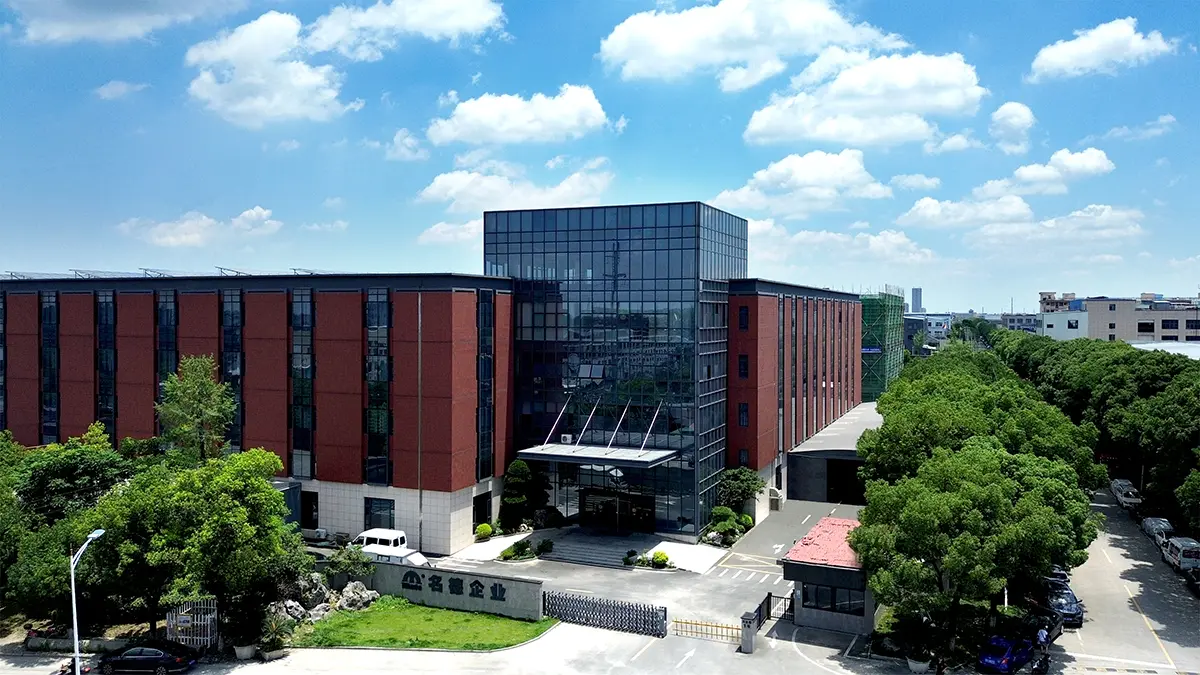
Why structural Polysulfone (PPSU) is replacing brass, copper, and PPR in critical Brazilian high-pressure installations.
Unlike PPR which softens under continuous heat load, PPSU retains mechanical strength and pressure ratings even during thermal shock cycles common in industrial applications.
Brazilian municipal tap water contains high concentrations of disinfecting chlorine agents. PPSU shows zero deterioration when exposed to highly chlorinated hot water loops.
Conforms to NSF/ANSI 61 global drinking water requirements. Guarantees that no heavy metals, lead, or toxic chemicals migrate into potable domestic water lines.
The global construction industry is transitioning rapidly toward lead-free building standards. Traditional brass fittings contain varying percentages of lead, which can leach into drinking water systems. In Brazil, local developers are adopting green building credentials (such as AQUA-HQE and LEED) which incentivize non-metallic, non-toxic piping systems.
Our PPSU material formulation features a high heat distortion temperature (HDT) and exceptional fracture toughness. It is designed to work in conjunction with PEXa expansion rings, forming a secure mechanical joint that requires no flame, glues, or chemical primers. The resulting joint is completely leak-proof, maintaining structural elasticity under ground movement and seismic conditions.
| Performance Index | PPSU Polymer Fitting | Standard DZR Brass | PPR (Polypropylene) |
|---|---|---|---|
| Working Temperature | -40°C to +95°C | -20°C to +110°C | 0°C to +70°C |
| Corrosion Resistance | Excellent (Immune) | Susceptible to De-zincification | Good |
| Leaching Risk | Zero (Chemical Inertness) | High Lead Release Risk | Minimal |
| Elastic Recovery | High (Ideal for Expansion) | Rigid (Deforms under stress) | Low Elasticity |
Tailoring high-performance piping components to Brazil's unique regional climates and agricultural landscapes.
In states like Rio Grande do Sul, Santa Catarina, and Paraná, modern residential designs incorporate hydronic underfloor heating. Our PEXa expansion rings and PPSU reducers secure deep slab connections, eliminating concrete-embedded joint leaks.
Coastal developments in Rio and São Paulo demand piping impervious to high salt-air corrosion. PPSU fittings provide long-term structural integrity without pitting or scaling, keeping high-rise water mains clean and safe.
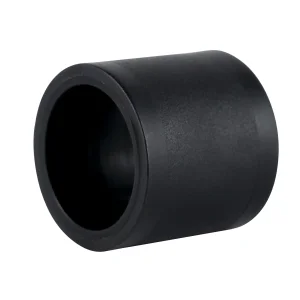
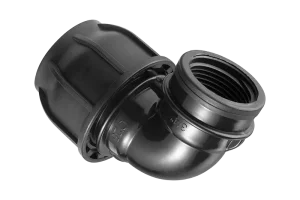
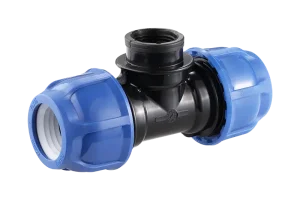
In hot dry regions, our robust PP compression couplings and HDPE fittings connect primary water lines to sub-laterals, delivering chemical-resistant performance and preventing pressure drops in large farming operations.
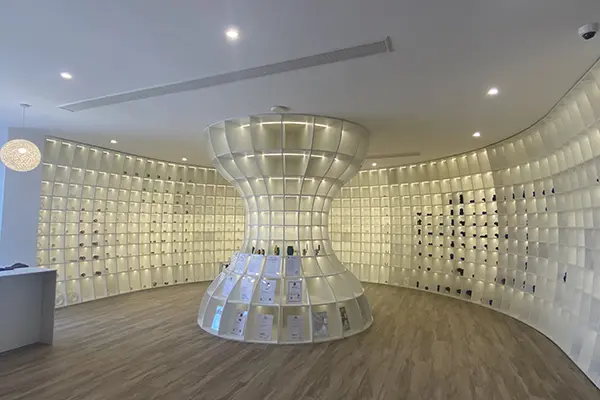
To ensure high production volumes for large construction developments, Ningbo Minde Building Materials Co., LTD. utilizes advanced automation. Our production campus in Zhejiang, China, spans over 90,000 square meters and is equipped to handle rapid global shipping demand.
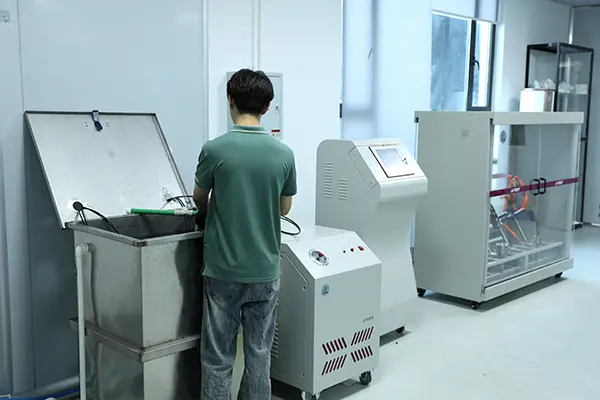
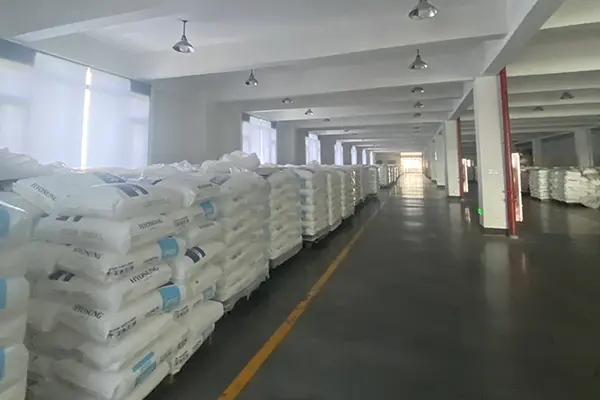
Our quality control system monitors production from raw materials to final pressure-testing. We use premium imported polymer resins to maintain molecular density, wall thickness, and dimensional accuracy for PEXa expansion systems.
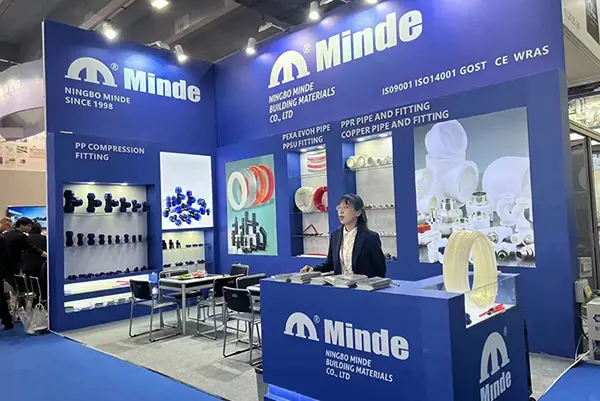
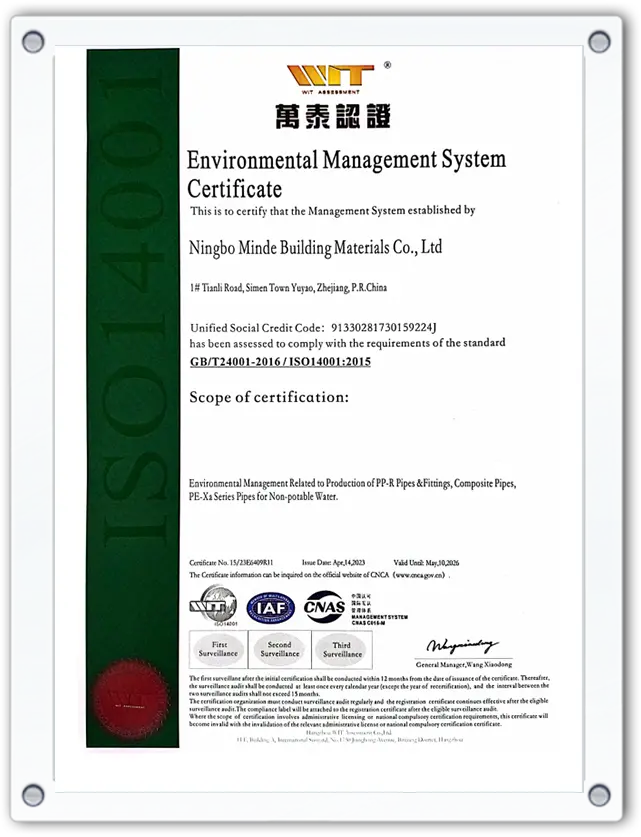
To ensure quality control, Minde operates three dedicated inspection points: incoming raw material analysis, in-process dimension checks, and post-production pressure testing. Our facility holds certifications including ISO 9001:2022, ISO 14001, CE, British WRAS, and Russian GOST, ensuring compliance with strict international markets.
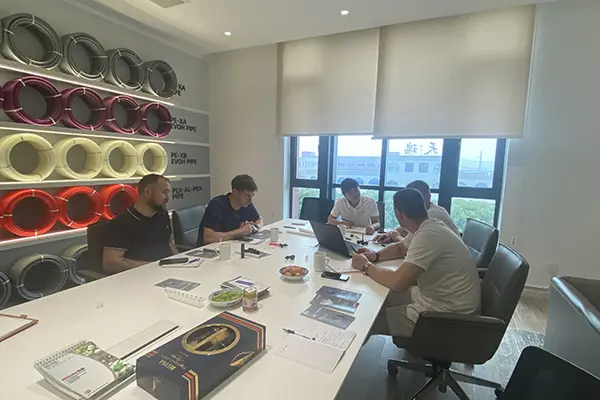
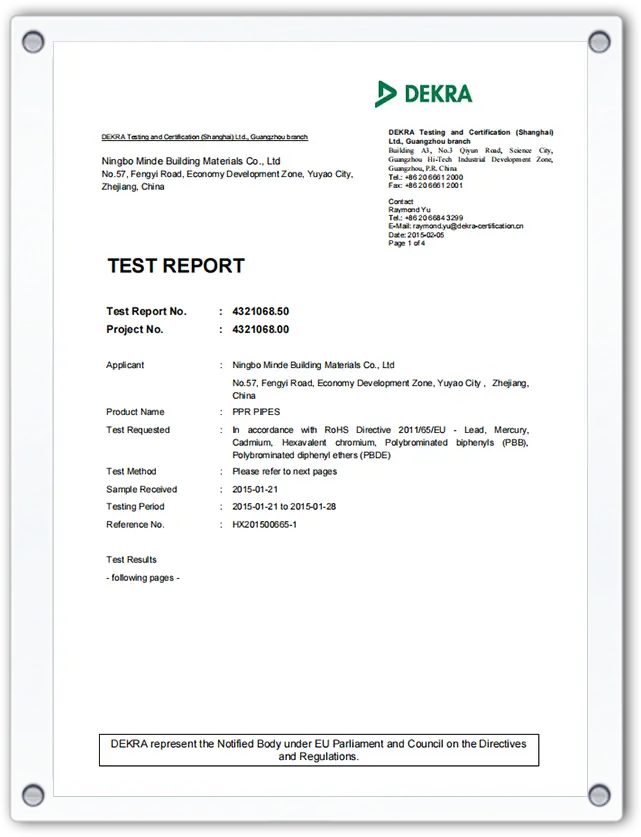
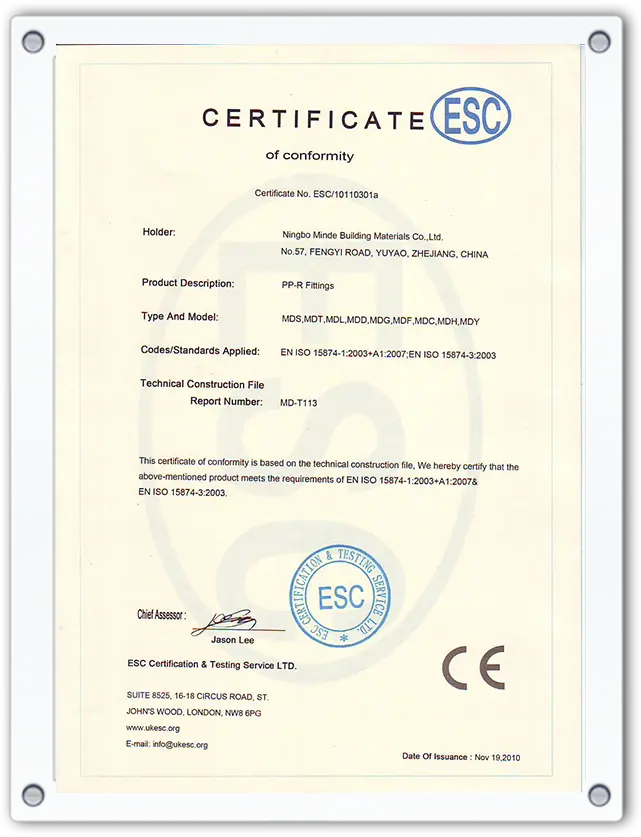
Importing plastic piping components into Brazil requires careful navigation of tax classifications and local certifications. Minde provides documentation to support smooth customs clearance at major ports like Santos, Paranaguá, and Itajaí.
Our experienced logistics department works with Brazilian dispatchers and customs brokers, offering flexible terms (FOB, CIF, CFR) to keep your supply chain reliable and efficient.
Expert answers regarding engineering specifications, raw material sourcing, and compliance standards for importing to Brazil.
PPSU is completely immune to de-zincification and stress corrosion cracking caused by aggressive water treatment chemicals. It offers excellent thermal stability, lower thermal conductivity (reducing condensation), is significantly lighter than metal, and is lead-free, satisfying modern environmental guidelines in Brazil.
Yes. With 85 high-capacity injection molding machines and an in-house tooling workshop, we customize product dimensions, colors, packaging designs, and laser-etched branding to help local distributors establish their market presence.
Expansion connections rely on the shape-memory elasticity of PEXa pipe and PPSU fittings, creating a secure joint without reducing internal flow diameter. Unlike crimp systems, there are no O-rings to degrade, minimizing flow restrictions and pressure drops.
Our standard production lead time is 25-30 days from deposit verification. Transit time from Ningbo Port to Santos, Paranaguá, or Rio Grande generally ranges from 35 to 45 days, depending on shipping schedules.
From engineering-grade PPSU components to durable PP compression systems, our products support domestic plumbing, underfloor heating, and agricultural irrigation networks.
 Minde
Minde