Explore our foundational range of premium Poly PPSU fittings, PP compression elements, and high-integrity valves manufactured to strict international specifications.
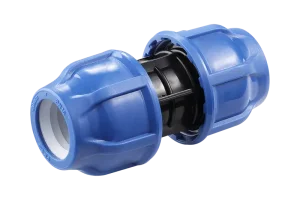
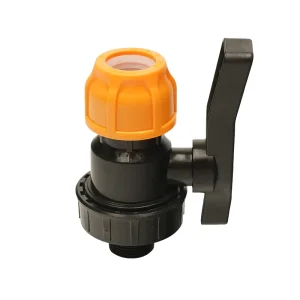
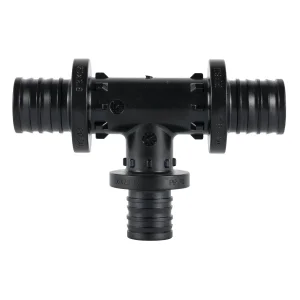
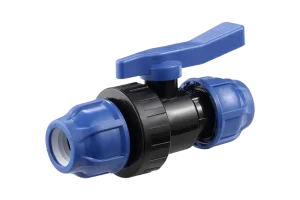
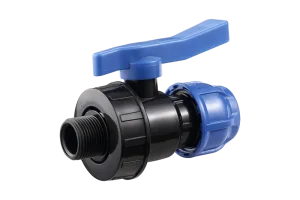
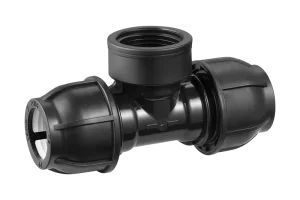
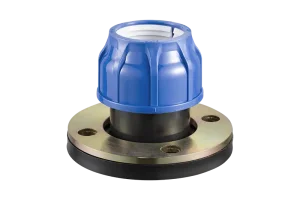
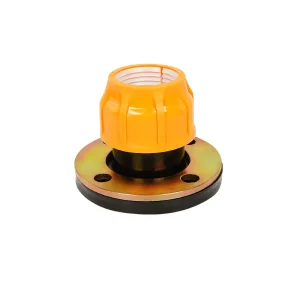
Analyzing the paradigm shift in hydraulic distribution infrastructures and the transition to high-density polymers.
Modern distribution engineering demands pipeline materials that exhibit zero degradation over extended operational life cycles. Traditional metallic infrastructures suffer from structural weakness due to electrochemical scaling and galvanic corrosion. High-Density Polyethylene (HDPE) systems combined with polypropylene (PP) compression components present a hydraulically smooth interior surface (roughness coefficient C=150 in Hazen-Williams formula), significantly dropping friction head loss and reducing pumping energy consumption.
For radiant floor heating and potable water supply systems, materials like Polyphenylsulfone (PPSU) and EVOH-oxygen barrier PEX have redefined safety. PPSU exhibits exceptional impact strength and chemical resistance at temperatures exceeding 95°C, making it suitable for modern plumbing manifolds. Concurrently, EVOH (Ethylene Vinyl Alcohol) co-extruded layers prevent oxygen permeation into closed-loop hydronic structures, eliminating chemical oxidation of boiler components.
Engineered adaptations for agricultural micro-irrigation, municipal distribution, and specialized HVAC networks.
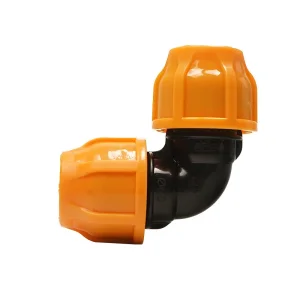
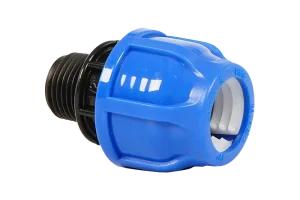
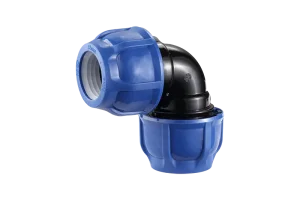
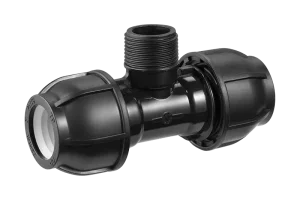
In high-salinity agricultural environments and arid localized regions, irrigation fittings must withstand high UV exposure and chemical fertilizers. Our PP compression fittings maintain leak-tight joints up to PN16 pressure ratings. By avoiding thermal fusion, installers can configure and repair distribution sub-mains quickly in fields using simple hand wrenches, minimizing crop downtime.
Urban water supply rehabilitation calls for materials with zero chemical leaching. Incorporating WRAS and NSF61-compliant formulations ensures that our poly fittings remain inert to chlorine and chloramines present in municipal systems. Under high mechanical stress, the internal split-ring grip design prevents pipe pull-out, even in seismic zones or sub-surface settlements.
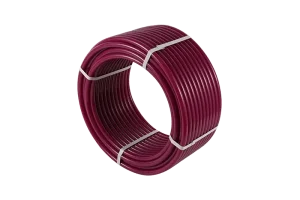
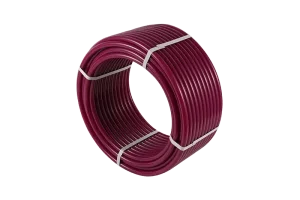
PEXa pipes combined with PPSU fittings provide optimal performance for residential thermal distribution. In cold environments, the high flexibility of PEXa avoids installation cracking, while EVOH layers act as a barrier against oxygen diffusion. This maintains system thermal efficiency over decades of continuous heat circulation.
Our commitment to polymer research, manufacturing automation, and structural resilience testing.
Establishing physical dimension controls for PP compression structures. Focus on dimensional accuracy, split-ring pull-out resistances, and basic PN10 product lines to support agricultural projects.
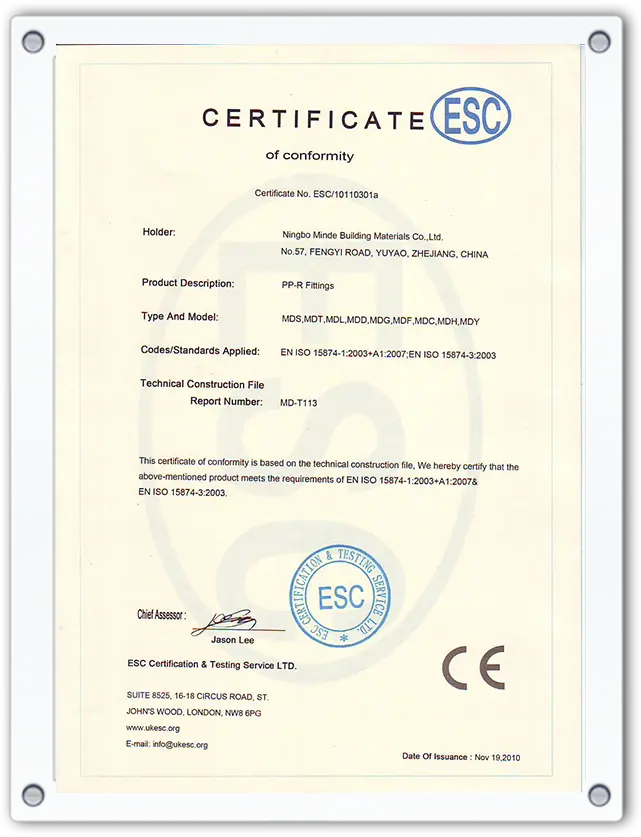
Introducing high-pressure PN16 fittings utilizing impact-resistant PP block copolymers. Integration of NBR/EPDM lip gaskets for high-performance sealing, certified under international standards (CE, ISO9001).
Scaling up production of PPSU quick-connect joints and EVOH multi-layer PEX barriers. Achieving WRAS approval for safe clean-water distribution and high-temperature hydronic floor installations.
Developing structural sensors within localized connection hubs for pressure and flow tracking. Researching bio-based polymers to reduce carbon footprint while keeping long-term chemical durability intact.
How Ningbo Minde integrates massive production capacity with precision QC controls.
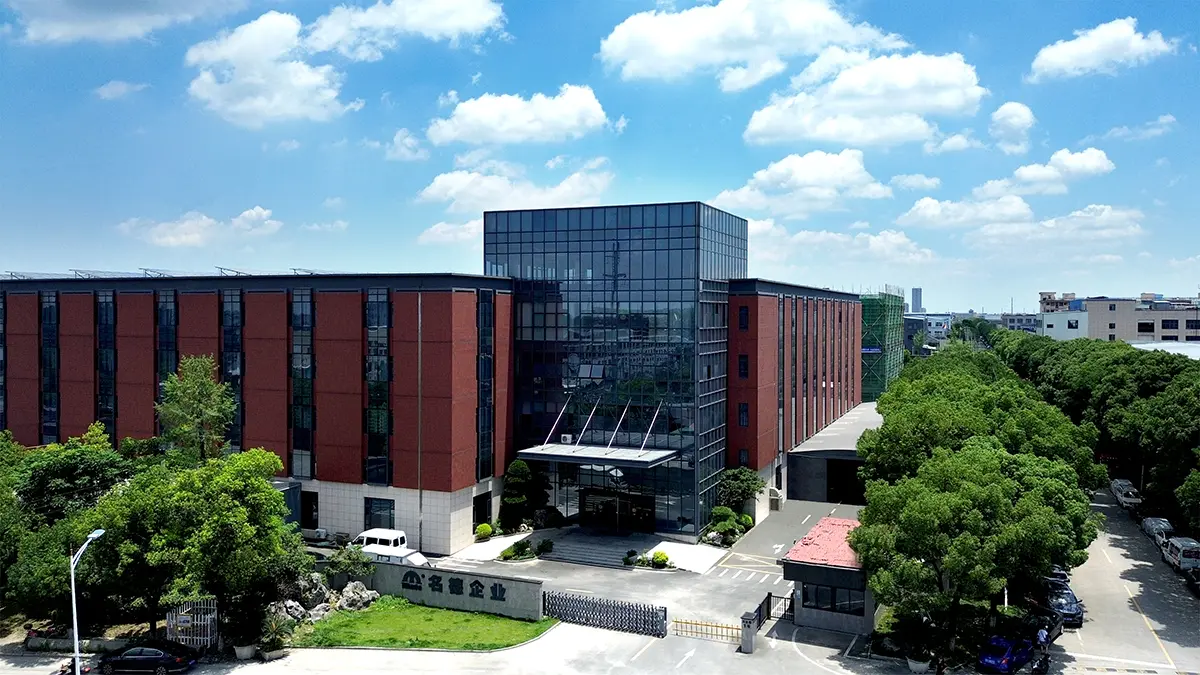
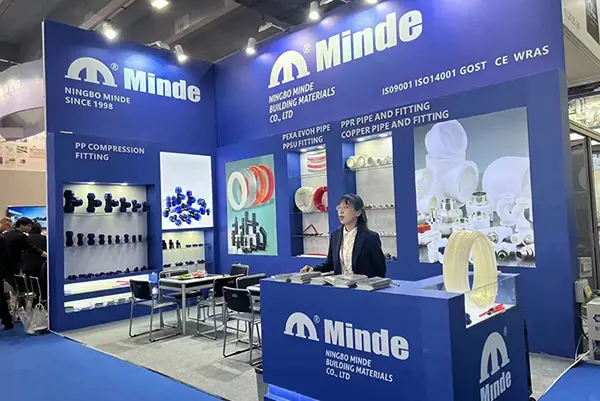
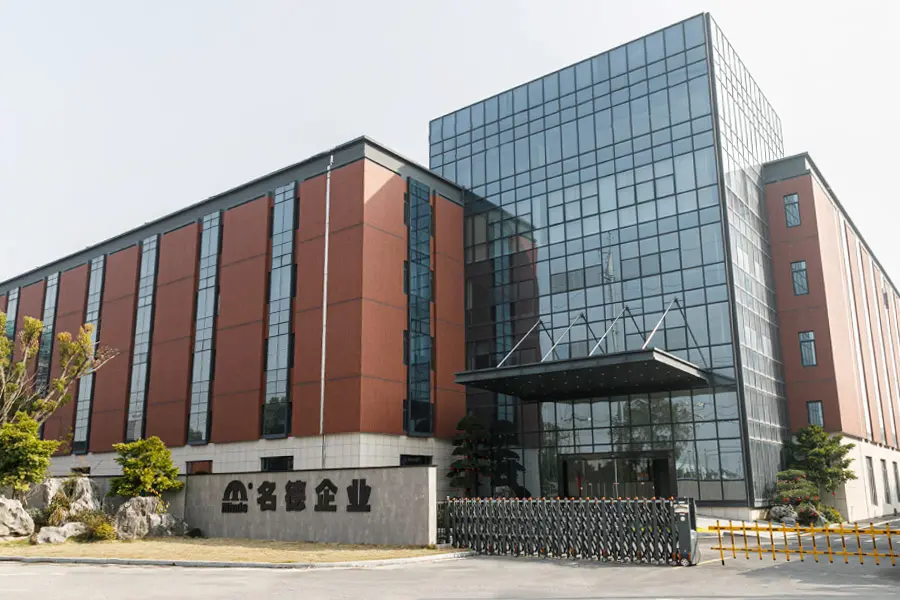
Based in Ningbo, Zhejiang Province, China, Ningbo Minde Building Materials Co., LTD. has spent over two decades developing high-performance plastic pipe and fitting solutions. To ensure structural integrity, the factory relies exclusively on high-grade imported raw materials rather than low-cost recycled polymers. This direct material control prevents premature aging and environmental stress cracking (ESCR) under cyclic loads.
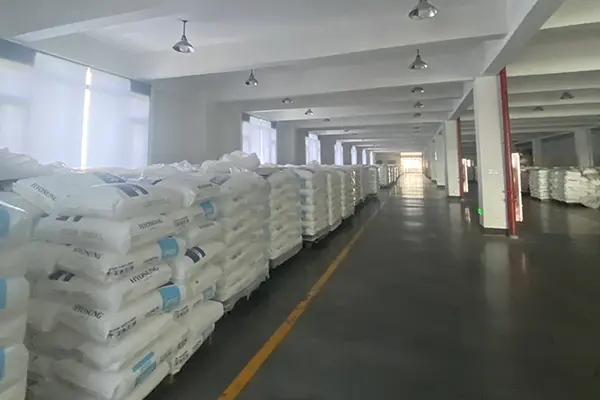
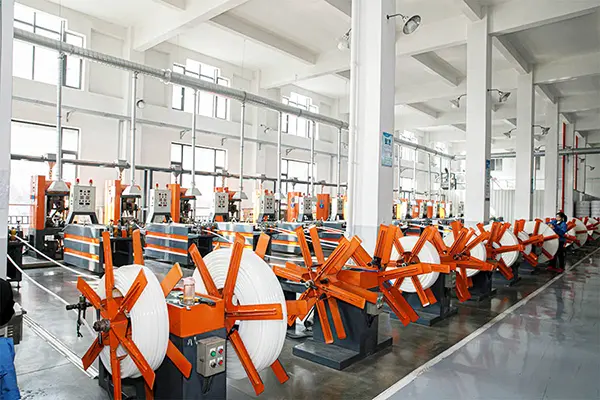
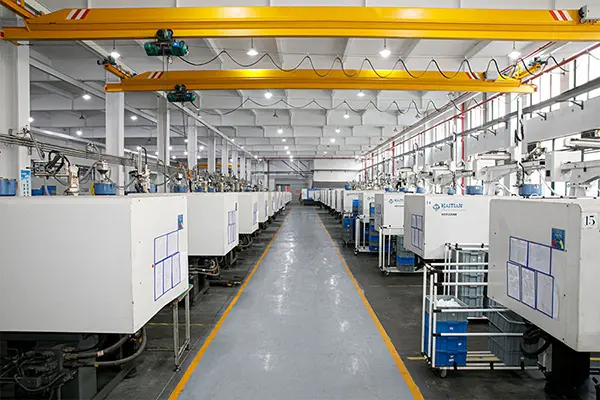
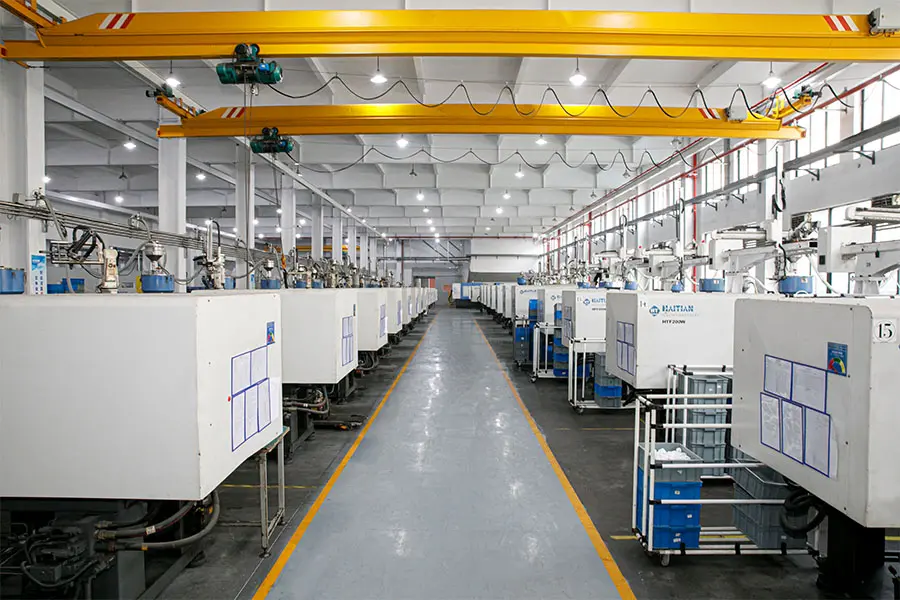
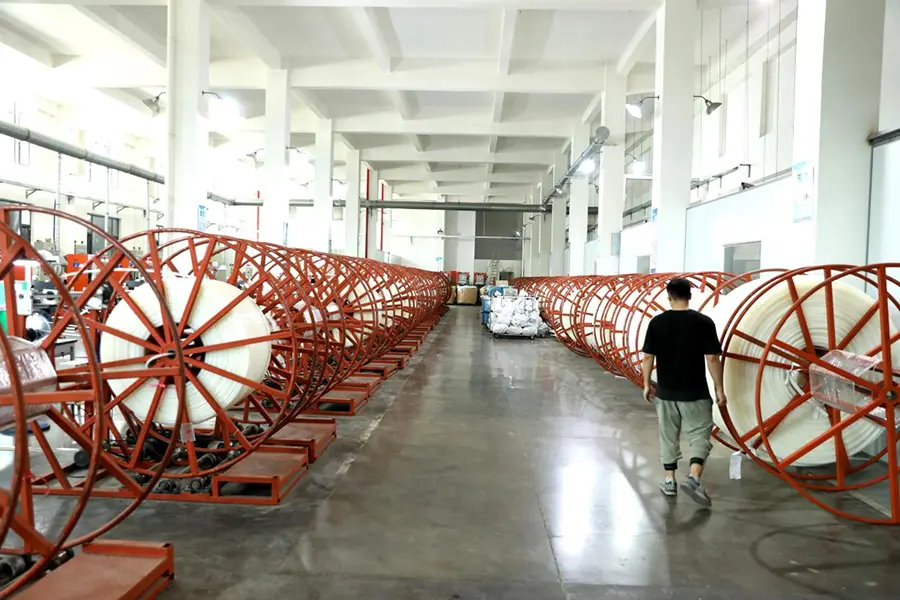
Spanning an expansive footprint of over 90,000 square meters, the site houses a modern manufacturing setup, including 45 automated pipe production lines, a closed-loop feeding network, and 85 precision injection molding machines. Supported by a workforce of over 200 technicians and engineers, we manage large-scale volume requirements while keeping dimensional tolerances within strict fractions of a millimeter.
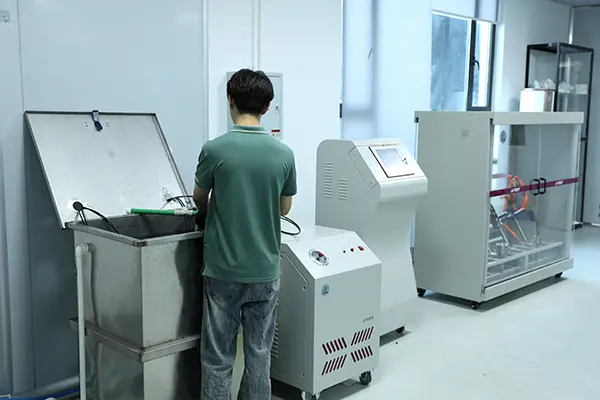
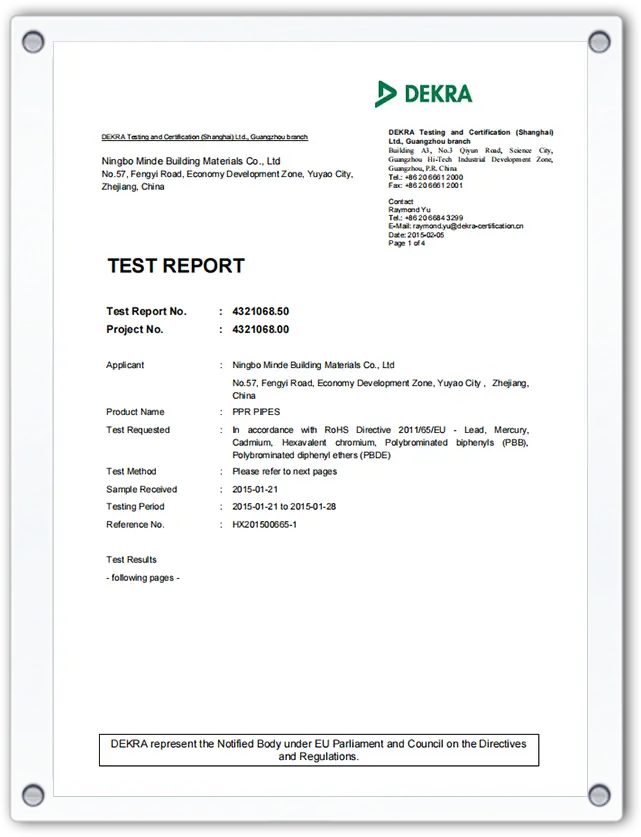
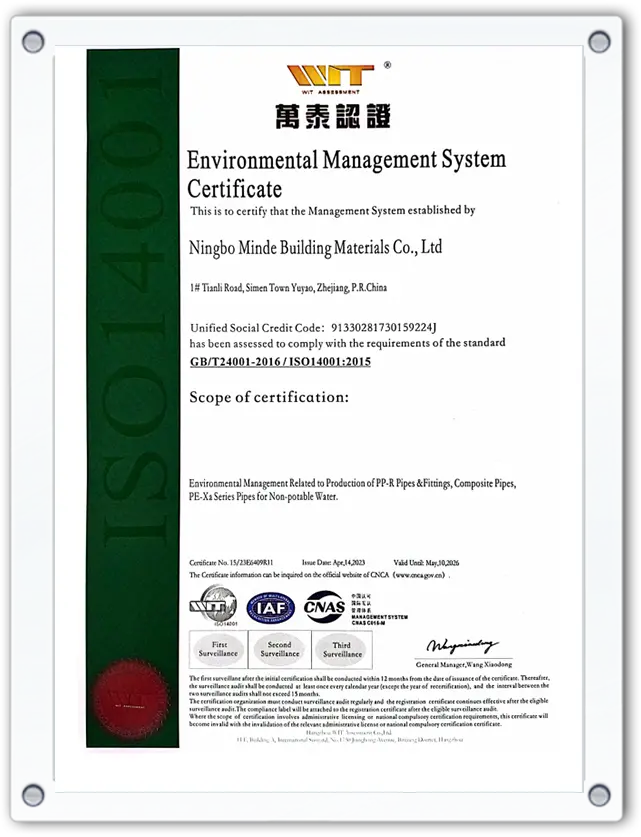
Our quality control program operates via three systematic inspection stations: raw material verification, online process tracking, and final hydro-static inspection. Every batch undergoes strict pressure testing to match standards like CE, ISO9001:2022, ISO14001, WRAS, and GOST.
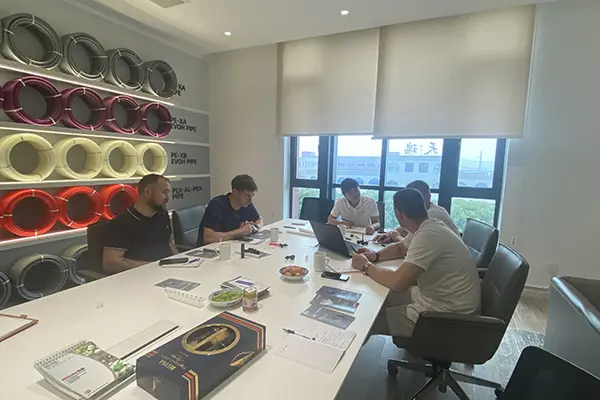
This localized capability enables Minde to supply reliable products to projects in over 50 countries, including Russia, Ukraine, South America, the Middle East, and Southeast Asia.
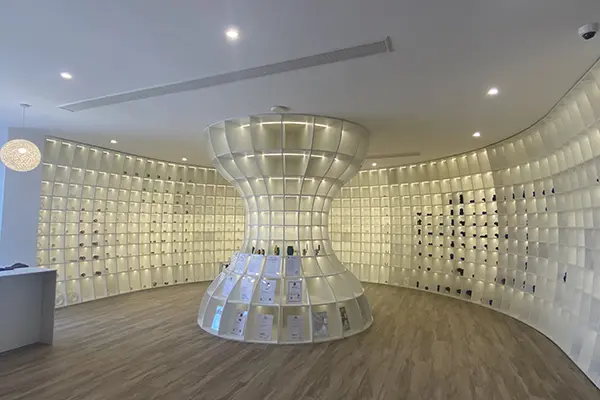
Global standards validation ensuring safety and durability in different regional markets.
Different markets present distinct mechanical demands. European projects require EN 12201 compliance for PE pipe networks, while Commonwealth markets specify WRAS drinking water approval. In Eastern Europe, GOST certifications are necessary to verify performance under deep sub-zero conditions. Ningbo Minde ensures our fittings conform to these regional and international specifications, facilitating smooth project execution.
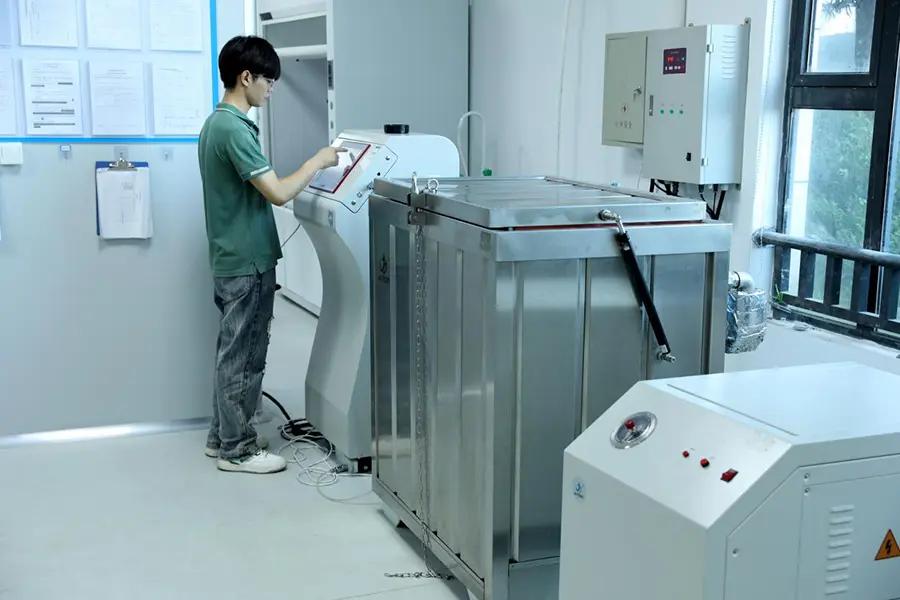
Our Quality Assurance Center conducts key mechanical verification tests, including hydrostatic burst pressure tests to confirm safety margins, mechanical pull-out tests under axial loads, and long-term thermal aging checks at 95°C to simulate field service. We also verify MFR (Melt Flow Rate) consistency to ensure reliable injection-molding quality across batches.
Tailored engineering and branding solutions to meet specific regional requirements.
At Minde, we offer customized solutions through our design department and tooling workshop. We provide tailored services for plumbing distributors and water authority projects, including custom logo branding, specialized thread standards (BSP, NPT, metric), and modified configurations for high-pressure applications.
We work with international logistics hubs to streamline shipping processes. By managing raw materials efficiently, we provide stable pricing for long-term contract partners. Additionally, we assist in securing regional conformity certificates, helping our partners bring products to market quickly.

Answers to common structural and material questions from fluid design engineers and project buyers.
The distinction lies in their sustained pressure ratings at a standard temperature of 20°C. PN10 fittings are designed for working pressures up to 1.0 MPa (10 bar), which is typical for secondary drip irrigation and lateral lines. PN16 fittings are rated up to 1.6 MPa (16 bar), providing the higher mechanical strength needed for municipal mains, mining slurry pipelines, and deep-well water transport.
In closed-loop hydronic heating systems, oxygen ingress through the pipe walls can cause issues. Water absorbing oxygen from the air can corrode ferrous parts like cast-iron pumps, radiators, and boiler heat exchangers, leading to sludge buildup and system inefficiencies. A co-extruded EVOH (Ethylene Vinyl Alcohol) layer blocks oxygen diffusion, protecting metallic components from oxidation.
PPSU (Polyphenylsulfone) offers performance comparable to brass while eliminating issues like dezincification and lead leaching. They resist mineral scaling, stand up to chlorine treatments, and weigh less, which reduces shipping costs. They also maintain their mechanical strength across hot and cold water cycles, making them a reliable alternative to brass fittings.
PP compression fittings are designed for HDPE (High-Density Polyethylene) pipes, sealing against the pipe's outer diameter. For PE-Xa or PE-RT pipes, expansion-ring, press-fit, or sliding-sleeve connection systems are recommended. These methods accommodate the elastic memory and thermal expansion rates of cross-linked polyethylene, ensuring a secure joint.
Browse our catalog of elbows, couplings, tees, and specialized multilayer piping solutions for modern fluid distribution.
 Minde
Minde